
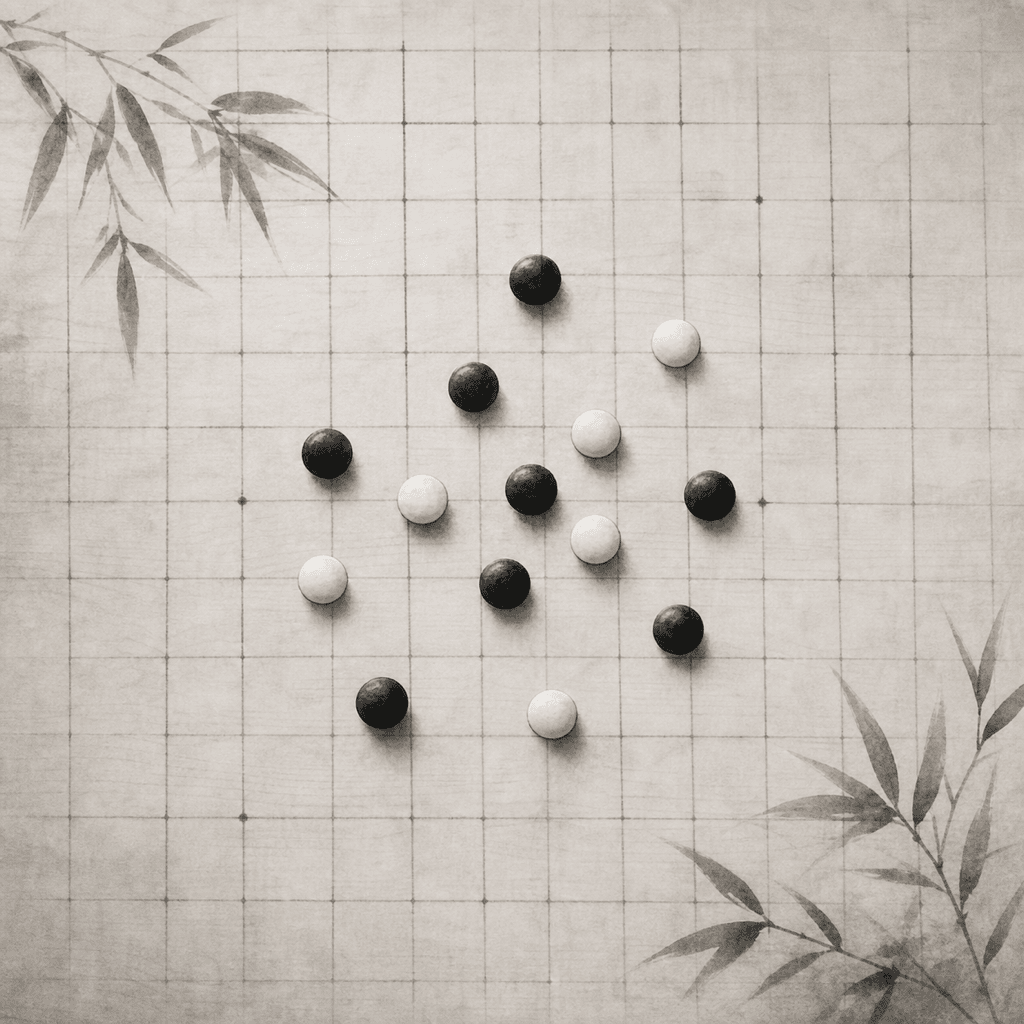
You open a tournament page and see Taraguchi-10. The first feeling may be hesitation: how is this different from ordinary Gomoku? The World Renju and Gomoku Youth Cup, begun on July 24, 2026, brings the term forward again. It reminds you that the most refined part of modern Renju often happens before the first stone truly lands.
Taraguchi-10 answers an old problem
In ordinary Gomoku, Black’s first-move advantage has long been taken seriously. Renju does not pretend fairness is already there; it uses rules to polish the weight of the opening.
The RIF overview describes forbidden-move limits for Black; the tournament page names Taraguchi-10 as the rule. It turns the opening from “who moves first” into “how both sides choose the position together.”
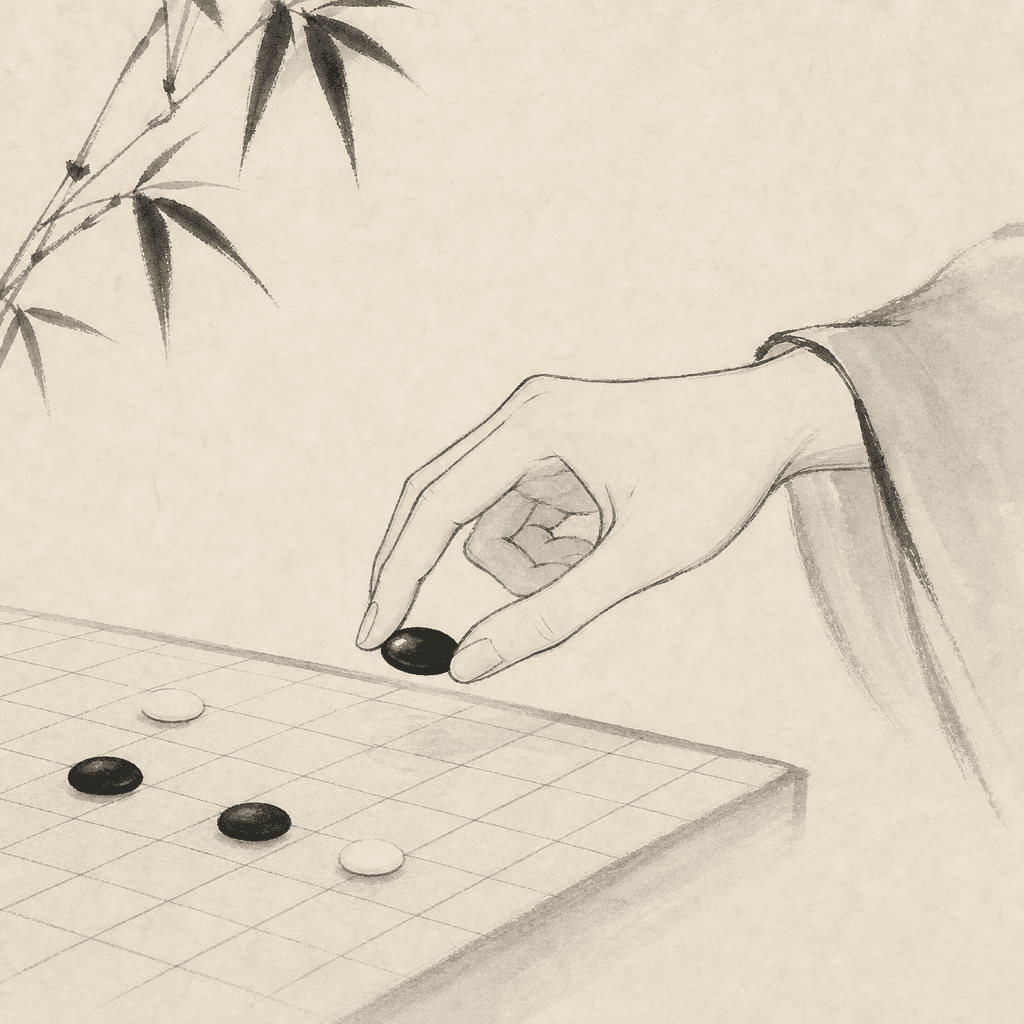
It turns instinct into negotiation
Taraguchi-10 is one branch of Renju opening rules. You do not need to memorize every detail before your first game. What matters is its temperament: proposal, choice, and exchange bring both sides closer to a shared start.
The design is restrained. It does not make the board noisy. It takes the first moves, where imbalance is easiest, and asks you to move more slowly. Slowness becomes a tool of fairness.
Slowness becomes a tool of fairness.
Why youth tournaments suit this rule
Youth events fear games decided too early by prepared patterns, and stronger players winning only through familiarity. The 2026 World Renju and Gomoku Youth Cup runs from July 24 to 30 on RenjuNet, with Renju and Gomoku groups scheduled separately.
For young players, Taraguchi-10 is not only more fair. It trains a modern sense of the game: understand why the position has been offered this way, then decide which risk to take.
When watching, look at choices before tactics
If you watch only for open threes and four-in-a-row attacks, you may miss the real drama. Taraguchi-10 is about how both sides accept a starting point, avoid overcooked theory, and express judgment before attack begins.
The first layer of information is not who plays more aggressively, but who knows earlier what kind of position they want. By the time tactics appear, many choices have already been buried in the opening.
It explains the distance between Renju and Gomoku
Gomoku’s beauty is direct: make the line, and the result is clear. Renju’s beauty is more craft-like: the same board remains, while forbidden moves, opening rules, and exchange mechanisms keep correcting first-move advantage.
So Taraguchi-10 should not be treated as gatekeeping. It is more like a fine layer of lacquer: the board stays quiet, but the hand-feel changes. You still see black and white stones; what changes is the responsibility behind each move.
Bring it back to everyday games
Casual games do not need the full Taraguchi-10 protocol. But the idea is useful: if first move feels too strong, try swap openings, preset openings, or have both players accept the starting position together.
Rules are not there to look professional. They are there to make the game worth continuing. A refined game often feels good because both sides still have room.
The taste behind a rule
WUZIQI likes this quiet improvement: it does not change the basic relation between black and white stones, only the way they meet. That is where Taraguchi-10 becomes attractive.
Next time you see the rule name, treat it as a tuning fork. The sound is still the sound of the same game, but every note has been more carefully calibrated before it begins. Try one game, and watch the first phase more slowly.
Fairness does not erase complexity. It makes choice clearer.