
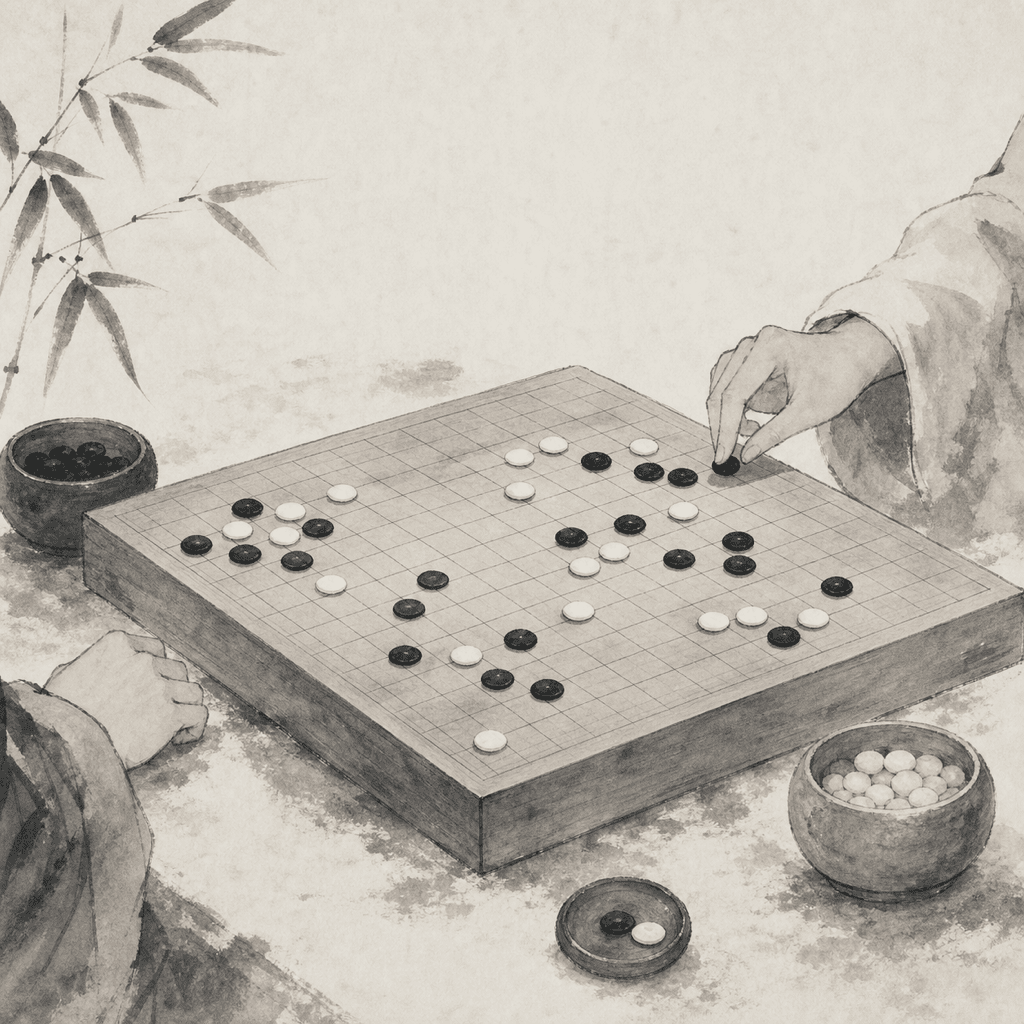
Maybe this has happened to you: before you have even made sense of the first ten moves, your opponent has steered the game into a line they know by heart. The 2026 World Youth Gomoku Championship has concluded in Dalian. The medals matter, of course. But for ordinary players, the more useful thing to pause over is the Taraguchi-10 opening rule used throughout the regular tournament. It brings the quietest, sharpest part of a game into plain view.
Dalian put the opening rule at the center of the game
This edition of the World Youth Gomoku Championship was held in Dalian from July 5 to 9, 2026. Public materials show that the event was organized with participation from structures connected to the Renju International Federation, the China Board and Card Games Administrative Center and others. Local reports also described the scale of the tournament and its hosting arrangements.
The RIF tournament page lists the Dalian divisions, with dates from July 5 to 8, 2026, and states the rule plainly: Taraguchi-10, with a time control of 60 minutes plus 30 seconds per move. Chinese Gomoku coverage reported that nearly 150 young players from six countries and regions took part, with the regular tournament finishing from July 5 to 8 and blitz played on July 9.
That may sound like administrative detail. It is not. In Gomoku, the opening rule is not wrapping paper. It is the foundation of the board.
Taraguchi-10 starts with the first-move problem
The hardest fact for Gomoku to escape is that the first player is naturally more comfortable. Once the stone lands on tengen, Black owns the center, and many attacking shapes grow more easily from there. Without constraints, high-level games can quickly become contests in who has memorized more lines, faster.
The point of Taraguchi-10 is to break apart the question of who has been handed the comfortable opening. It is not simply Black first, White second. Through opening choices, swaps, restrictions and later placements, it makes both sides responsible for the position. The first move still matters. It is no longer a one-way gift.
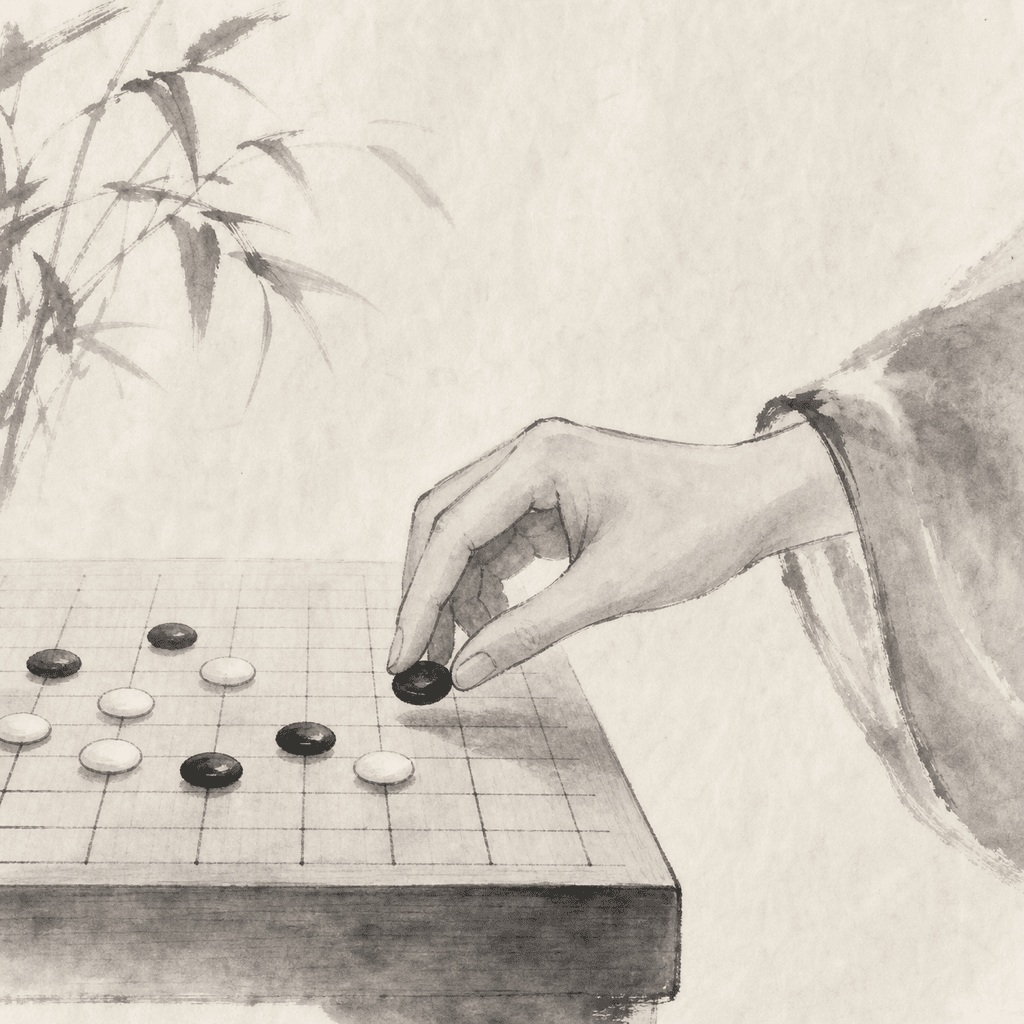
For ordinary players, the first thing you feel is a different texture in the opening. You cannot only ask, “Which move have I memorized?” You also have to ask, “If I give my opponent the choice from here, does this position still hold?” That makes the game calmer, and more modern.
The rule quiets the board first
Ten candidate points put a ceiling on preparation
Many people assume that elite competition is simply about preparing more. Preparation is part of strength, certainly. But if preparation can cover the game all the way into the middlegame, over-the-board judgment gets flattened. Taraguchi-10 gives preparation a place. It also gives it a boundary.
The “10” is not decorative. It gives the opening choice a range without letting it sprawl endlessly. There are lines to study, but the game does not collapse into memory alone. That matters especially in youth competition, where players need to learn not only the answer, but the shape behind the answer.
Take a common situation. You know a variation near tengen, and you know where an open three threat may appear. But when your opponent uses the rule to guide the position toward another group of candidate points, you have to judge distance, connection and counterattack timing all over again. Your preparation is still there. It just cannot play the whole game for you.
Open threes and double-threes expose your judgment earlier
The beauty of Gomoku often lies in threats that have not quite taken shape. An open three is not just three stones. It is the possibility of growth with room at both ends. A double-three is not a flourish; it is a question put to the defense in two directions at once. The more balanced the opening rule, the more these shapes must be grown through judgment.
In casual games, many open threes look beautiful but fail because the earlier structure was crooked and nothing connects. Once the rule has reduced Black’s easy advantage, pretty shapes have to withstand inspection. Can they become a four-in-a-row? Can they force the only defensive point? Can they complete their rhythm before the opponent’s counterattack arrives?
That is why, when I watch youth events, I am less interested in only the champions’ names. The mistakes young players make under this kind of rule often teach more. A double-three imagined too soon, a defense that misses by one intersection, these are closer to an ordinary player’s daily life than a medal table is.
A shared rule lets players from different countries speak at the same table
With nearly 150 young players from six countries and regions in one event, the greatest risk is not different styles. It is different languages. Not English or Chinese, but opening systems. If everyone uses the rule they already know best, comparison becomes muddy.
Using Taraguchi-10 throughout fixes the first layer of the tournament’s grammar. Russian players, Japanese players, Chinese players: all face the same opening pressure. How do you choose? How do you swap? How do you see what follows under the clock?
The time control, 60 minutes plus 30 seconds per move, matters too. It does not force you to move on instinct the way blitz does, and it does not stretch so long that preparation swells without limit. For young players, it is a finely controlled test: deep enough, but not indulgent.
For ordinary players, the opening rule is a training method
You do not have to reproduce the full tournament procedure. What matters is to train with the questions behind the rule. After the opening, the first question is not “Where is the strongest move?” It is “If I had to play the other side, would I still accept this position?”
That question makes you honest. In many amateur positions, Black looks pleasing when it is your side. Switch to White and it suddenly feels dangerous. That is the value of the rule: it makes you see the board from both sides, instead of rushing forward on your own appetite for attack.
Even if you usually play free openings, this method can slow the game down in a useful way. Slow does not mean sluggish. It means each move has texture. Beauty is reason enough. But the positions that remain beautiful usually survive being viewed from the other side.
What lasts longer than medals is how young players learn to open
The results will be recorded. The medals will be celebrated. All of that matters. But years from now, what may be most worth remembering about this Dalian youth championship is that it asked a generation of young players to handle first-move advantage, preparation and live judgment under the same rule set.
Taraguchi-10 is not a complicated term every ordinary player must master immediately. It is a reminder that a game of Gomoku begins discussing fairness, beauty and choice from the very first stone. The more refined the rule, the quieter the board becomes.
To understand the result, understand the opening
The next time you lose in the first ten moves, do not be too quick to blame a middlegame miscalculation. Set the opening back on the board. Look at it from the other side. Ask which move gave someone the better future. Then play one quiet game.