
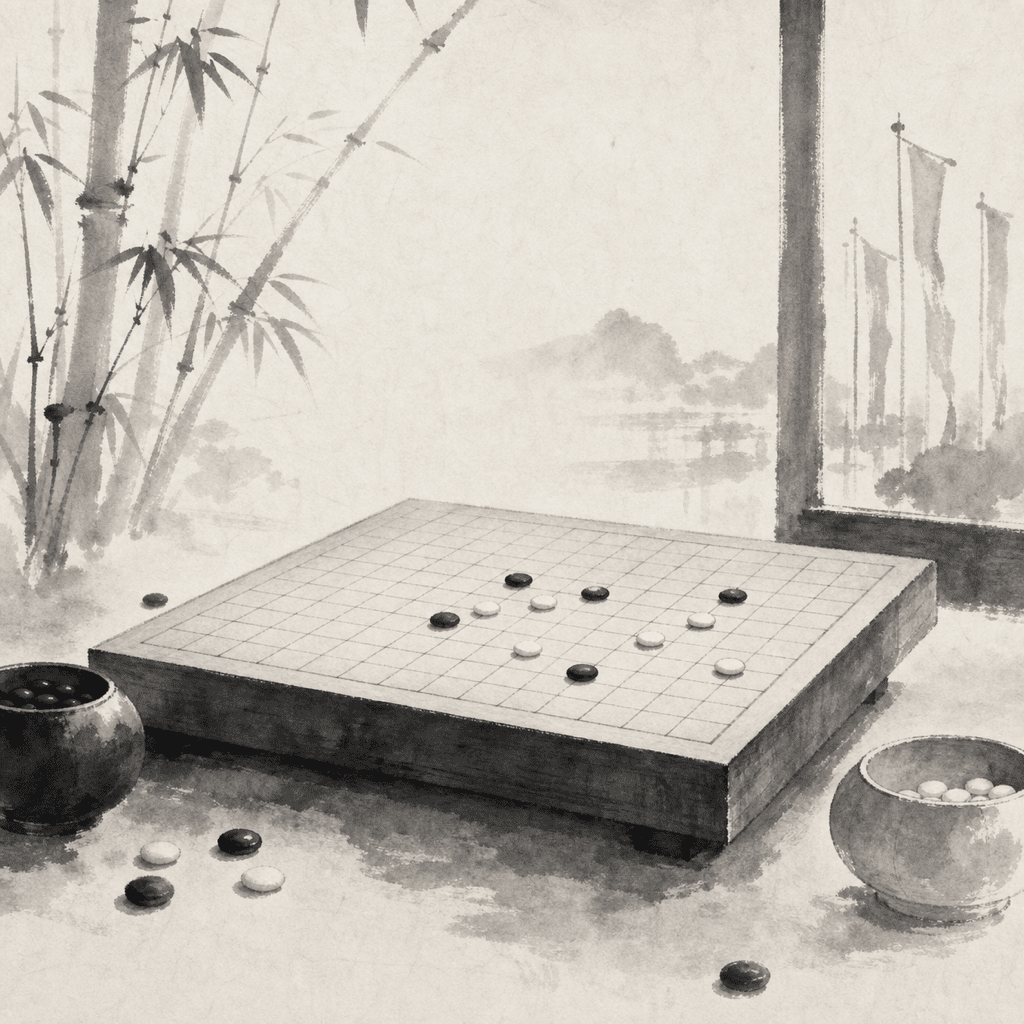
You may have seen a game like this: a young player stays steady through the first half, then the clock begins to count down, and the hand moves before the judgment is ready. On the final day of the Dalian World Youth Championship, play turned to blitz. What mattered was not who had memorized more openings, but who could, in less time, bring an open three, a four-in-a-row, the edge of a forbidden move, and their own breathing back into one order.
Blitz is not a side event. It is another kind of measure
According to a Dalian Daily report, the 2026 World Gomoku Youth Championship opened in Dalian on July 5. Regular games ran from July 5 to 8, with blitz and the closing ceremony scheduled for July 9. The order is telling: slow games lay out the fundamentals; blitz then exposes reaction, trade-offs, and psychological steadiness.
Many people treat blitz as a lively coda. It is closer to a highly polished mirror. Without the cover of long thought, a player’s first instinct rises to the surface more directly. Refined judgment often appears not after the longest think, but just after the shortest hesitation.
Time pressure magnifies the smallest bad habits
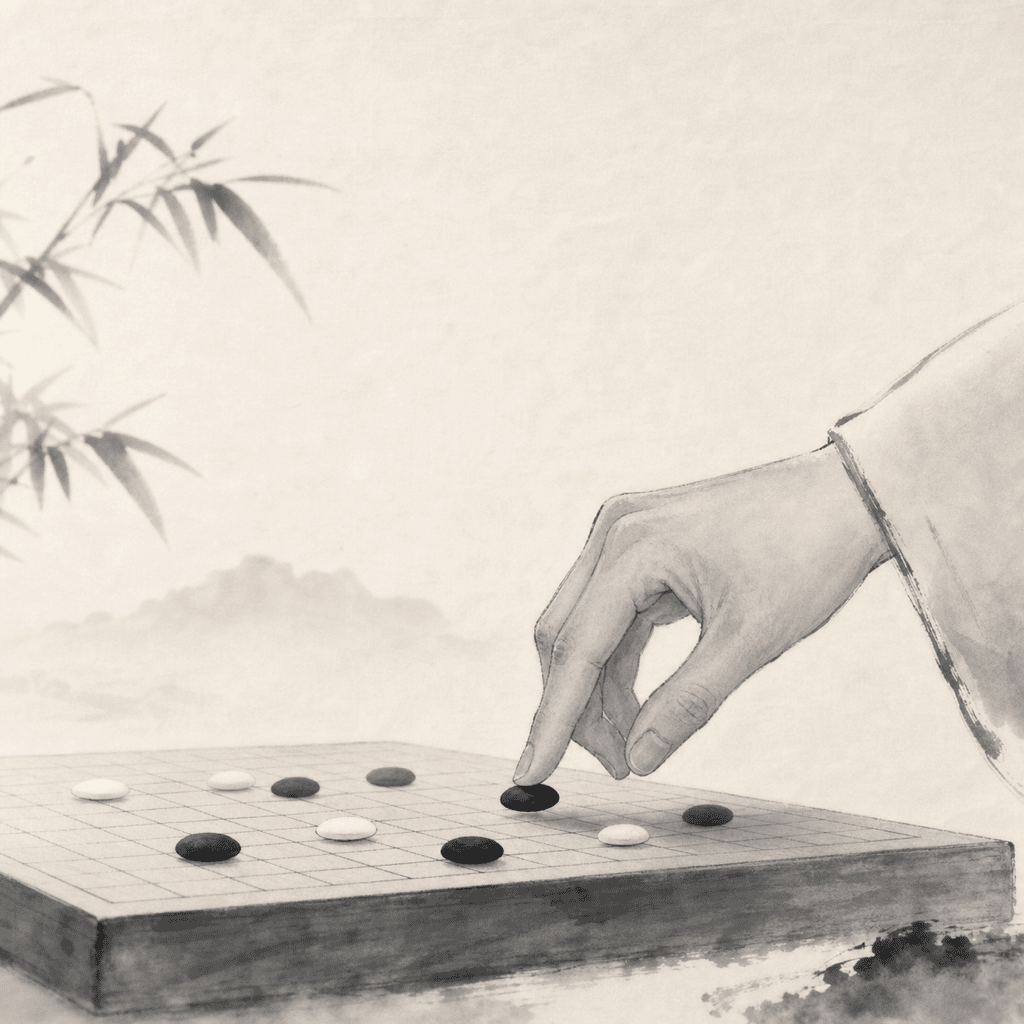
In a regular game, if a child misses an opponent’s jumping open three, there may still be time to recover. In blitz, that kind of miss is usually punished at once. If Black builds a diagonal threat through the center and White only worries about blocking a straight four-in-a-row, the next move may be a double-three that ties the position down.
This is not really a question of being slow. More often, the problem is an unstable order of observation: first looking for your own kill, then checking whether the opponent has one, and only at the end considering forbidden moves and exchanges. Under the clock, when that order breaks, the game becomes rough.
With less time, habits show
That is also where young players become most interesting. Bad habits appear quickly, but good ones are just as visible: before placing a stone, scan for fours, then threes, then the connections around tengen. That restraint can make a blitz game suddenly go quiet.
Taraguchi-10 makes the opening more than memory
The Dalian event used the Taraguchi-10 competition rules throughout. For the youth groups, its importance is not only that it is “fairer.” It also pulls the opening back from rote memorization into choice: you need to understand why a certain fifth-move range is offered, not merely remember a pretty branch.
In blitz, that understanding is tested quickly. A player who reaches the middlegame on memory alone will often lose direction around the teens once the opponent changes the move order. A player who truly understands shape knows where the position is thick, and where it merely looks busy. Beauty is a reason in itself; on the board, though, beauty still has to survive the next move.
Young players are often sharpest near tengen
It is no surprise that young players like to seize speed around tengen. The center offers many connections and many directions; one move can seem to cover a horizontal, a vertical, and a diagonal line all at once. The problem is that the center’s freedom also creates illusions.
Suppose Black builds two closed threes around tengen. If White blocks only according to shape, they may miss a forcing four-in-a-row that has already taken form on the side. In blitz, a “pretty shape” must answer one simple question: does it have sente value? If not, it is only decoration.
A home event adds a useful distance
The report notes that this year’s event brought together about 150 young players from roughly six countries and regions, was organized by the Renju International Federation, and was held in China for the first time in 30 years. That setting makes it easy to look only at results. But what is more worth watching in a youth event is how different training cultures meet on the board.
Some children have very clean openings, as if repeatedly polished. Others have a strong attacking sense in the middlegame, willing to risk one move in exchange for the initiative. Blitz makes those differences sharper, because it gives players little time to edit themselves.
The Chinese team is relatively large, with players mainly coming through national selection events or direct qualification from the previous championship. For them, playing blitz at home is both an advantage and a pressure. Familiar language and familiar spectators bring winning and losing closer to the body.
The online Youth Cup is a continuation, not the same event
There is one more piece of context after the schedule, and it is easy to confuse. RenjuNet separately lists the online World Renju and Gomoku Youth Cup from July 24 to 30, using vint.ee together with platforms such as Zoom and Twitch, also under Taraguchi-10. It can be seen as a continuation of the youth season, but it is not part of the Dalian offline event.
The RIF event schedule also places youth and team world events within a longer yearly arc. Seen that way, Dalian’s blitz day was not an isolated day, but a compressed test before young players move from the offline arena into a broader competitive environment.
Watch less for wins, more for recovery
The most moving thing about blitz is not that every move is accurate. Quite the opposite: it lets you see how young players recover after making a mistake. After missing an open three, can they first steady the position? After misjudging an exchange, can they immediately pull the game back into playable shape?
That is more modern than a simple win or loss, and more rewarding to watch. If a child can stay calm in byo-yomi, know when to attack and when to admit the opponent is faster, they have already learned one of Gomoku’s important lessons: the board does not reward panic.
The board does not reward panic
So the July 9 blitz day is worth watching slowly. Choose one game and follow three decisions around the countdown: was the first move instinct, did the second correct it, and could the third return to order? Try a game yourself, and you may better understand the sharpness and restraint of young players.