
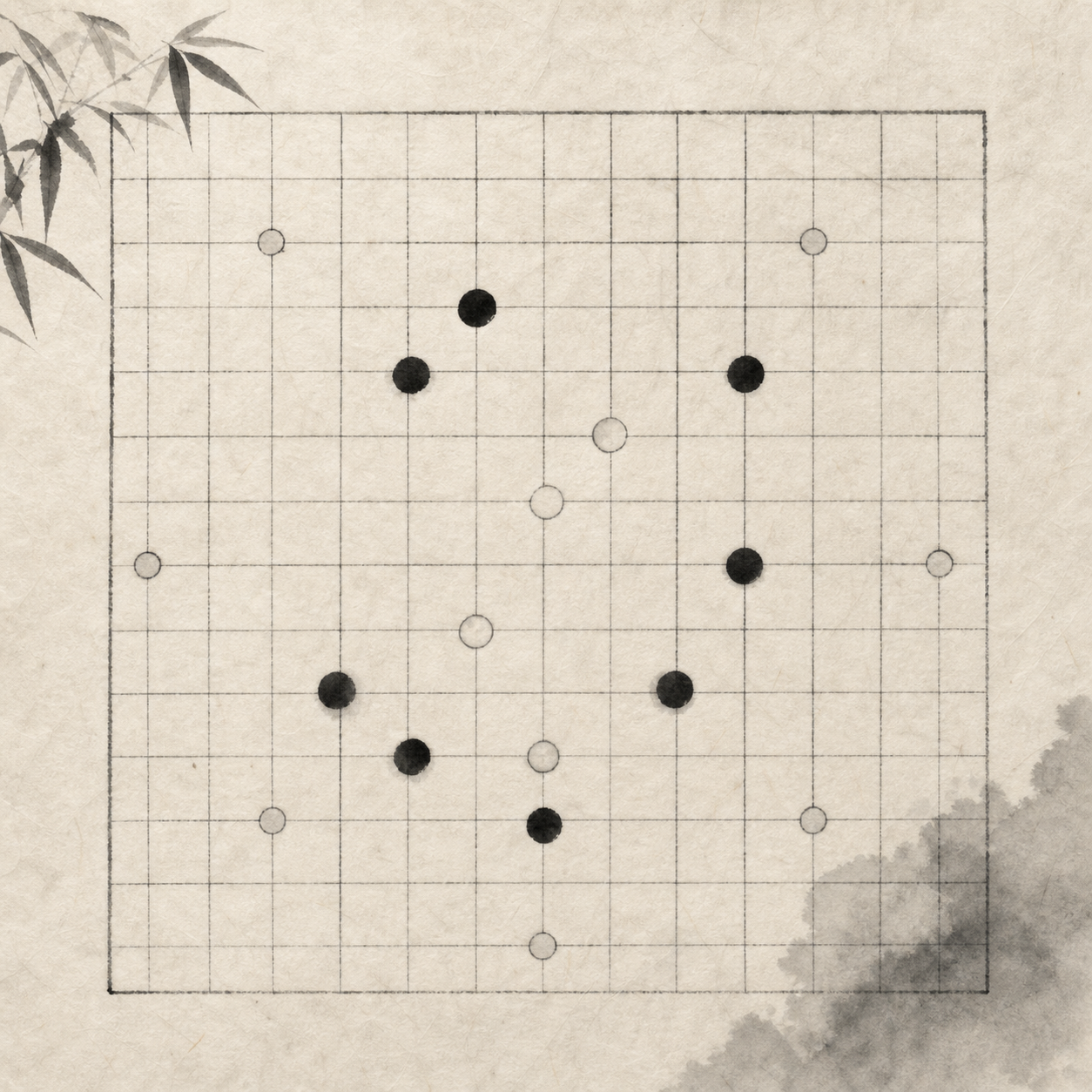
Forbidden moves in Renju can sound like punishment the first time you meet them: Black is ready to play, and the rule says no. A better way to read them is as a light hand on the scale. They do not make the game busy. They make the first-player advantage thinner.
Where the first-move edge begins
Gomoku has a plain objective: build an unbroken line horizontally, vertically, or diagonally. That simplicity is also where the imbalance begins. Black moves first, and therefore reaches attacking rhythm one beat earlier.
Under freer rules, strong players often win not because they have seen the final move, but because they keep creating threats that must be answered. The defender spends the game being pulled along.
A forbidden move is not a lock on Black
Renju marks a few high-efficiency shapes as forbidden for Black, including double-three, double-four, and overline. White does not carry the same restrictions because the rule is correcting the structural edge that comes with moving first.
That does not mean Black cannot attack. Black still has to build threats. The difference is that the bluntest, hardest-to-defend forks are no longer available as shortcuts.
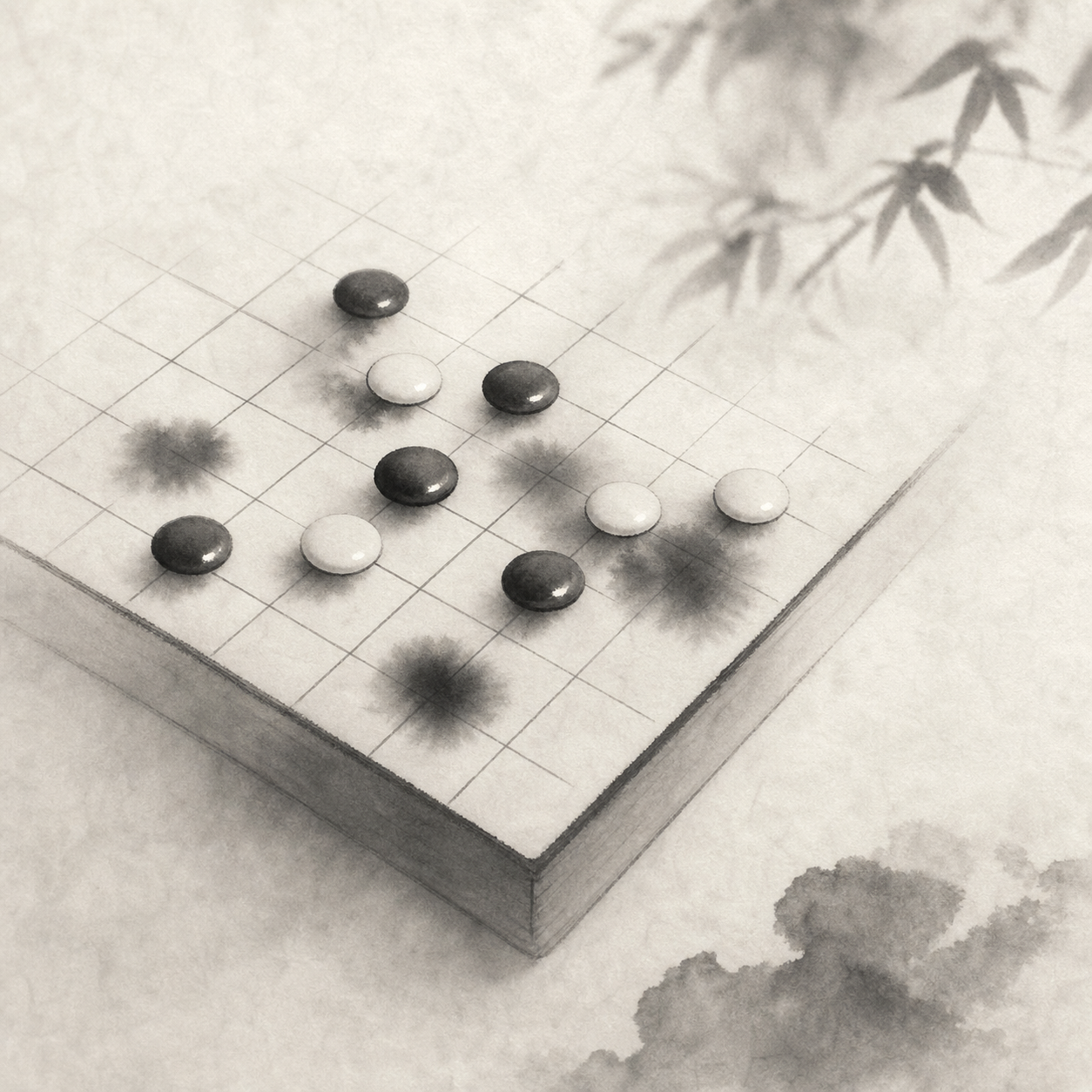
Why the double-three is dangerous
The point of a double-three is not simply that three stones exist. It is that one move creates two open threats that can keep growing. The opponent can usually answer one side, while the other side upgrades.
That shape is dangerous because it takes choice away from the defender. The game may not look finished, but the next round of tempo has already been arranged.
What double-four and overline repair
Double-four is more direct: one move creates multiple lines that are close to complete, and the defender often lacks enough moves to handle them. Overline repairs another boundary case. If longer-than-standard lines also won, Black would gain routes White cannot easily mirror.
Removing those routes does not make the game gentle. It asks Black to win with cleaner order rather than flattening the position through a loophole.
Good limits make the result feel more like choice.
White is not being given a privilege
White appears to have fewer restrictions, but White is also absorbing the pressure of the first mover. Forbidden moves give White not a privilege, but a usable defensive language: some points are less scary, and some can be deliberately invited.
At a high level, forbidden moves are not obscure referee calls. They enter both players’ plans. White can guide Black toward forbidden points, while Black has to route an attack around those reefs in advance.
The most useful way for beginners to read them
If you are new to forbidden moves, do not begin by memorizing a long glossary. Start with one question: does this move create two threats that both demand an answer? If it does, ask whether those threats are genuinely open.
Then ask about the boundary. If the line keeps growing, is it a standard winning shape, or does it step beyond what the rules allow? Once you read this way, forbidden moves stop feeling like exceptions and start feeling like traffic rules on the board.