
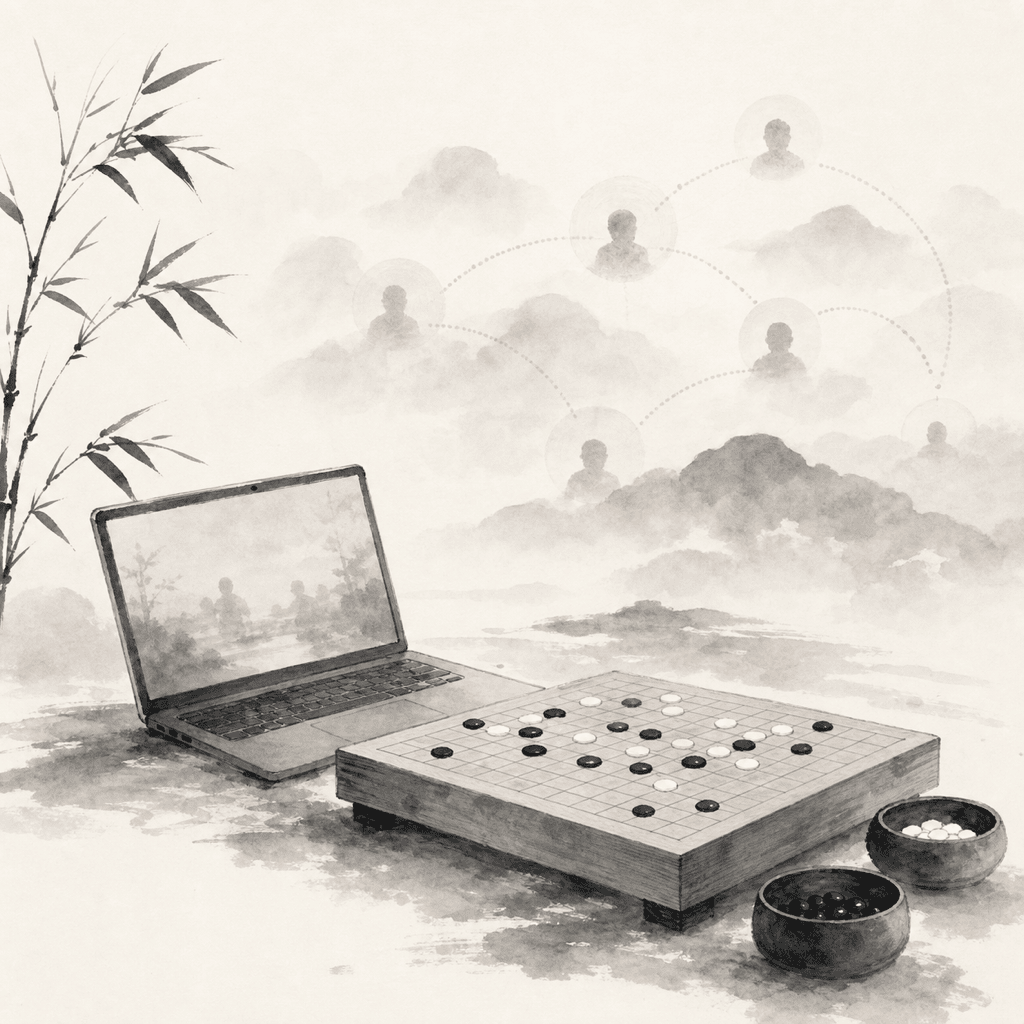
You may know the feeling: there are plenty of online tournaments, but not many that make you stop and watch. This Youth Cup is different. It brings young players, a formal schedule, and a quiet online board into the same frame, making Gomoku’s sense of order visible again.
This is not a casual game. It is a weeklong youth tournament.
According to the tournament page on Renju.net, the 2026 World Renju and Gomoku Youth Cup online takes place from July 24 to 30. The venue is listed as online, with the schedule arranged by the relevant international Renju and Gomoku organizations.
The details sound plain enough: dates, venue, schedule, organizers. But those plain details are exactly what separate an online match from a quick game in an ordinary room.
The point of the Youth Cup is not only who wins. More important is that you can watch young players handle openings, judge attack and defense, and live with the cost of a single mistake under a clock. The board is calm. The pressure is real.
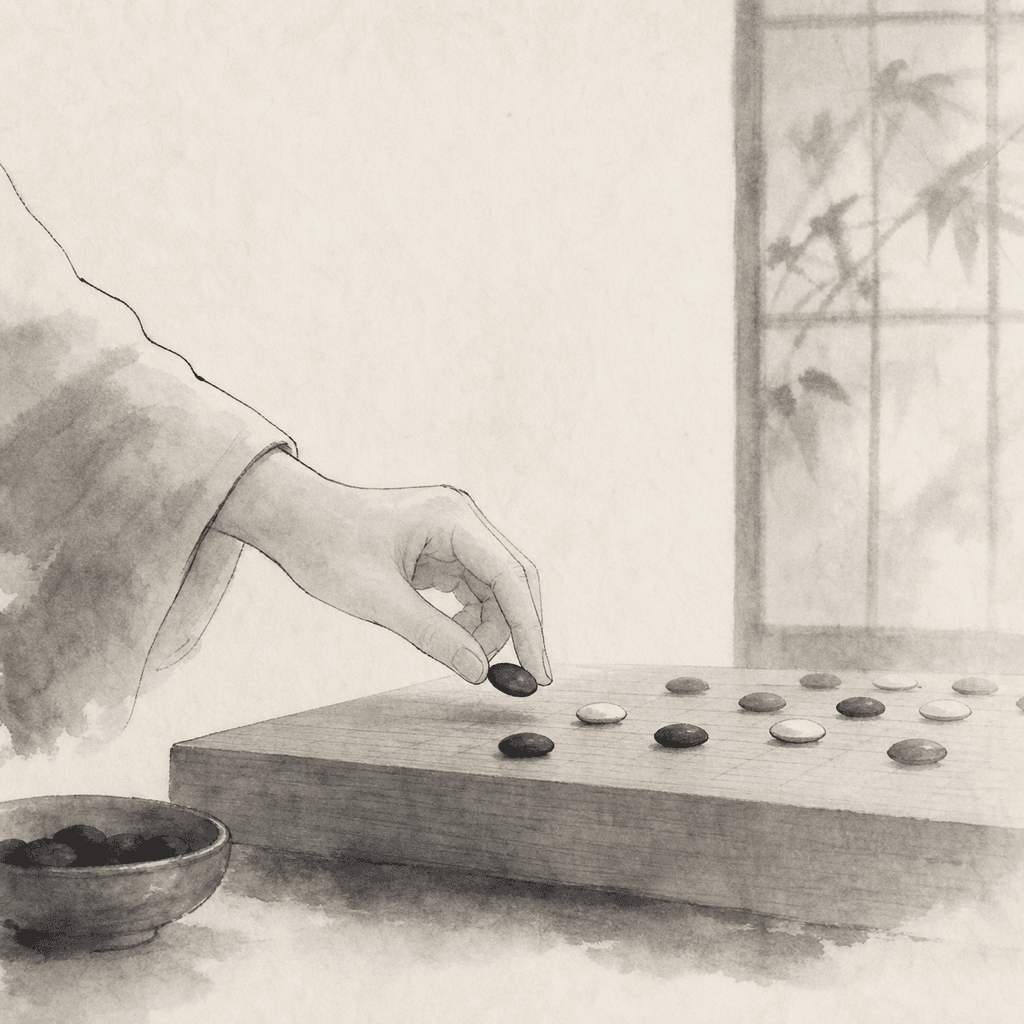
An online board carries order, not just convenience
When people talk about online tournaments, convenience is usually the first thing mentioned: no travel, no venue rental, play across regions. But that is only the surface. What makes an online Youth Cup work is its ability to put time controls, rounds, records, and oversight in one stable space.
A modern online board should make you think less about the interface and more about the shapes on the board. Stones should be clear. Coordinates should be restrained. The last move should be easy to identify. The whole game should feel continuous, almost tactile. That kind of refinement is not decoration. It is part of the competition.
When a player faces an open three around move ten or twelve, what he needs is not dazzling effects but a clean environment for judgment. Does a point have four-in-a-row potential? Can a line be blocked? The less visual noise there is, the closer judgment comes to the game itself.
A good-looking board lets judgment grow quiet
In youth games, the best part is how mistakes happen
Games between mature players often resemble polished objects, with few rough edges exposed. Young players are different. Their calculation can be sharp, and their intentions are more likely to appear directly on the board.
Suppose Black takes the initiative near tengen. White does not immediately cover a diagonal line, choosing instead to build pressure on the other side. A few moves later, you may realize it was not a simple oversight, but a counterattack that looked more tempting from White’s point of view. Mistakes rarely arrive out of nowhere. They usually have their reasons.
When you watch the Youth Cup, it is worth watching less for the result and more for the turns. Which move tilted a balanced position? Which defense handed over the initiative? Which seemingly ordinary sleeping three later became pressure on two lines?
Open threes, double-threes, and forbidden moves divide young players
If you think Gomoku is only about making five in a row, the Youth Cup will quickly undo that impression. In formal play, judgments around double-three, four-in-a-row, overline, and forbidden move divide a game into many small thresholds.
Under Renju rules in particular, Black’s advantage is restrained by the forbidden-move rule. Young players have to see both their own attack and the boundaries of the rules at once: Can this move be played? Does it create a forbidden move? Is the opponent steering you toward that line?
That is also what makes youth competition compelling. You can see technique and discipline grow together. Being able to attack is one level. Being able to stop when you want to attack is another.
Tallinn gives the online tournament a coordinate
The event materials also include the description “World Gomoku Youth Cup 2026 online Tallinn Estonia.” An online tournament does not require everyone to arrive at the same playing hall. Still, a clear location marker gives the event a coordinate that can be remembered.
That may seem like a small thing, but it is not minor. Traditional sports rely on arenas to create ceremony. Board-game tournaments rely on schedules, arbiters, records, and public pages to create trust. The online Youth Cup compresses those elements into a screen. The form is lighter; the responsibility is not.
For spectators, this also lowers the threshold. You do not need to know every player’s history. Begin with one game, and you can see how a young player faces position, rules, and time.
Start with one fixed opening
If you want to watch today but do not know where to begin, start with the opening. Look first at the opening five moves, especially the choices around tengen: Does Black fight directly for the center, or pull the battlefield toward the edge? Does White restrict at close range, or leave room for counterplay?
Then watch moves six through twelve. This is where the first real directional choices often appear: continue expanding one line, or turn to create a new threat. Many games plant the seeds of victory and defeat here.
Finally, watch the finish. A truly elegant win is not always a long chain of forcing attacks. Sometimes it is simply three consecutive moves that leave the opponent able only to defend. That rhythm is quiet, but it has force.
It reminds you that formality can be light
The Youth Cup is worth watching not because it dresses online competition in noise, but because it lets formality appear in a lighter way. A clear schedule, a traceable tournament page, and game after game played seriously to the end are enough to carry weight.
For young players, this is competition. For spectators, it is an entrance into learning judgment. For Gomoku itself, it is a quiet demonstration: the game does not need spectacle in order to stand.
Formality can be light, too
If you have a little time today, choose one Youth Cup game and watch it slowly. Do not rush to guess the winner. First see where the first open three appears, then watch who makes the position steadier. Play a game, perhaps. And try watching one, too.