
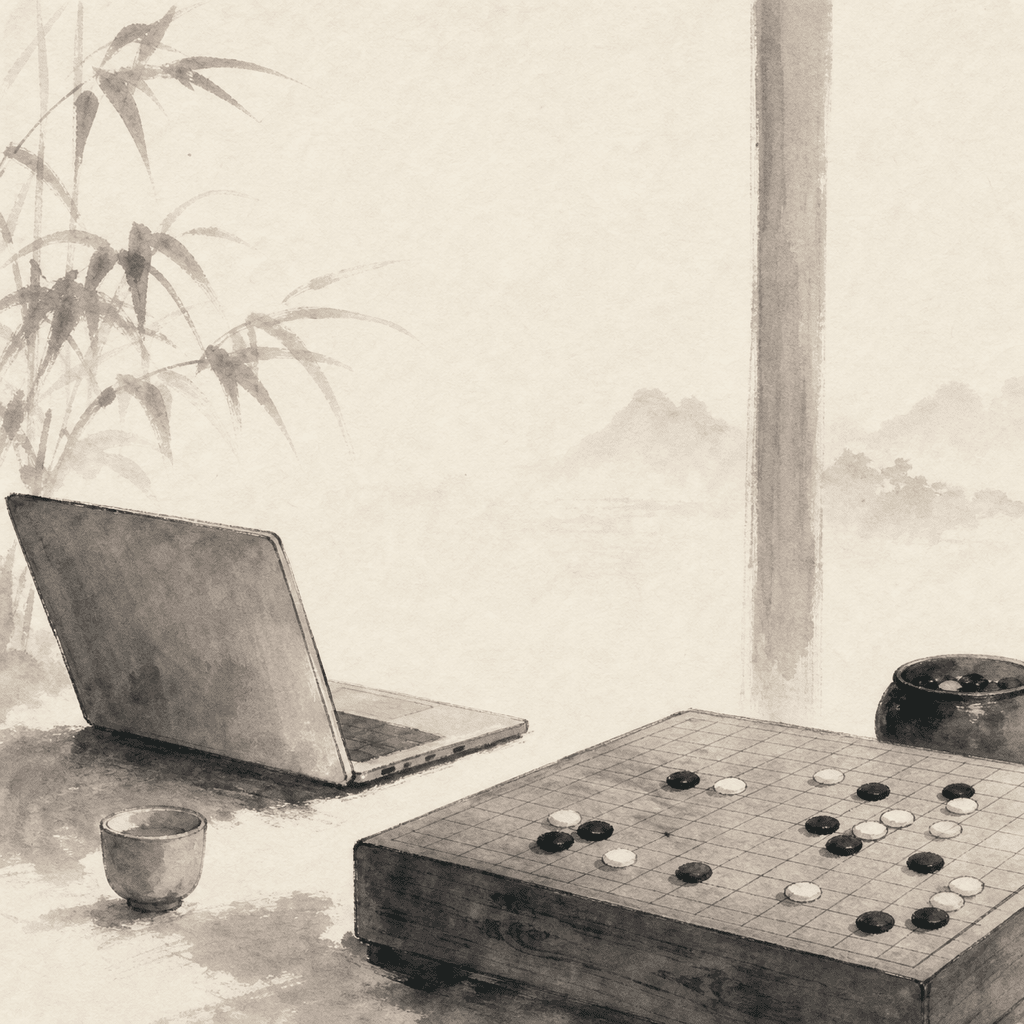
When you open an online board, the first thing you hear is usually not applause. It is the faint breathing in the room. From July 24 to 30, 2026, the World Renju and Gomoku Youth Cup, listed on RenjuNet, is held online, with Tallinn, Estonia marked as the location and Taraguchi-10 as the rule set. It is a reminder that a tournament for young players can also be very quiet.
Online play removes the noise and leaves the moves
Putting the Youth Cup online is not just a matter of moving tables and chairs onto a screen. It changes the soundscape of the match: no ring of spectators, no steady clack of a wooden chess clock, less of the excitement that comes with travel. The player faces a glowing board, and after every move, a wait that must be carried alone.
That may bring Gomoku and Renju closer to their essence. The board is small; the variations are dense. A modest-looking connection can become, a few moves later, pressure that cannot be repaired. The online format lowers the external decoration and makes it easier to see what young players are really practicing: judgment, restraint, review.
Taraguchi-10 slows the opening down first
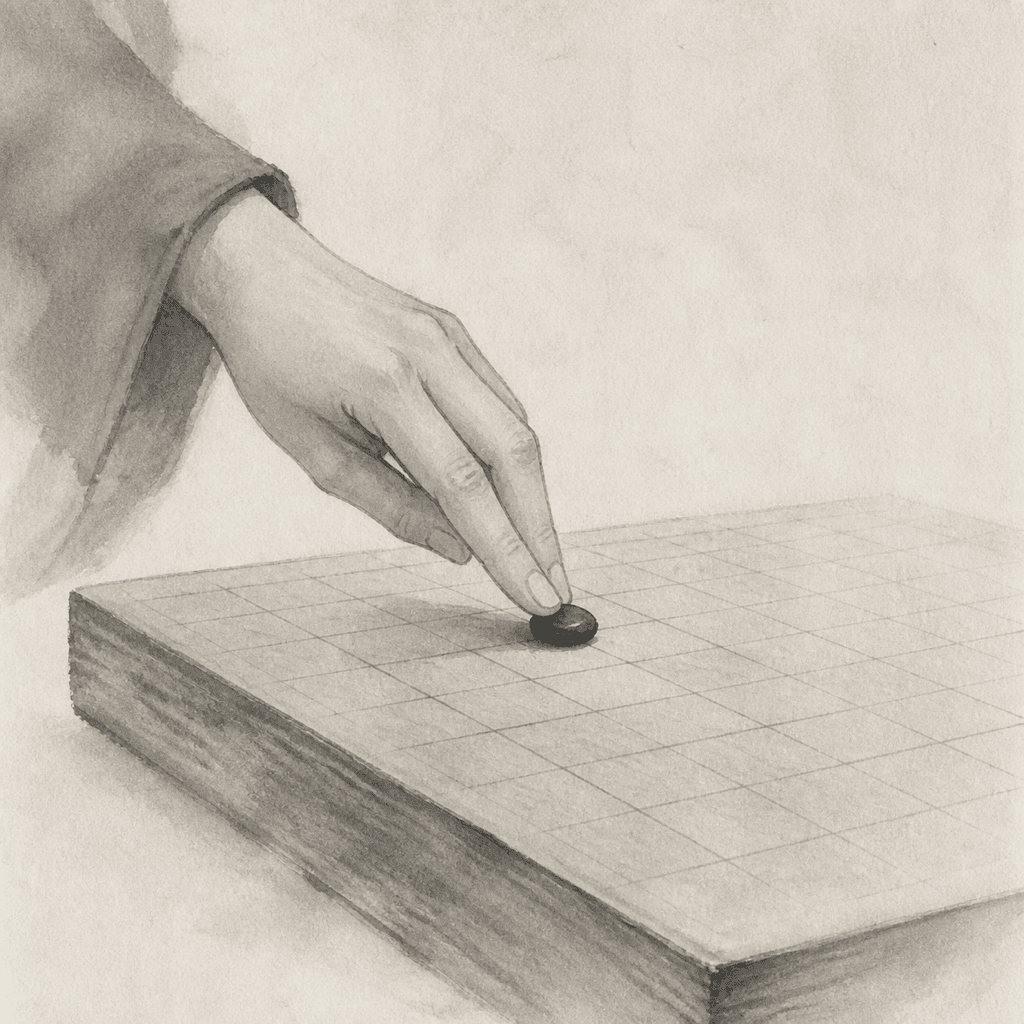
RenjuNet lists the rule set for this event as Taraguchi-10. To a spectator, the name may feel more unfamiliar than the shapes on the board. To a player, its meaning is direct: the opening is not about casually pushing stones toward the center, but about finding balance inside constrained choices.
Youth tournaments especially need that slowness. An opening that is too free tends to reward memorized routines; one that is too rigid can lock away creativity before it appears. A good rule is like a very light hand. It steadies the tilt of the opening without making the judgment for the player.
The quieter the rule, the clearer the judgment.
Young players train patience, not only calculation
When people talk about Gomoku, they often rush to attack: open threes, four-in-a-row threats, double threats. But in a youth tournament, the more revealing moments are often the ones that never make it into the game-record headline: whether a defensive move leaves half a breath of life, whether an exchange keeps the position within a range the player can understand.
Patience is not caution. It is the ability to let the position come into focus. If a young player is too eager to prove something at once, the board will punish that eagerness quickly. If the impatience can be held back, the attack often becomes cleaner.
Online matches still need touch
A screen cannot give you the weight of a real stone, but an interface can still have a sense of touch. Clear coordinates, a restrained marker for the last move, a countdown that does not glare, these details affect a player’s breathing rhythm over a long game.
That is the direction WUZIQI has always preferred: not turning the board into a stage for technical display, but letting it feel like a polished object. Beauty is reason enough. Quiet, too, can change the quality of judgment.
Three small things to watch
If you only watch games now and then, you do not have to chase every variation. Start with three things. First, who claims a sustainable direction earlier in the opening. Second, whether someone uses a defensive move to create a counterattack in passing. Third, before the endgame, whether each block is merely filling a hole or also shrinking the opponent’s space.
The value of a youth event comes after the games
The standings in any cup matter, of course. But what youth tournaments often leave behind is the habit of post-game review. Online play naturally preserves the game record, and makes it easier for coaches, peers, and players themselves to return to the critical forks.
This kind of review does not need to be rushed into a slogan. A better method is to ask one small question: if I returned to that move, could I keep the position simpler? For a young player, that question is more useful than “Did I play cleverly?”
An international feeling on a small board
RenjuNet puts the event location, dates, and rules on the same public page. That plain structure suits Gomoku well. The game does not need to be packaged as a grand story. Young players from different regions placing stones on intersections under the same rules is already powerful enough.
The online format makes that international feeling lighter. There is no grand entrance, but there is the same board, the same clock, the same silence. For a game that advances through details, that lightness feels exactly right.
Then return to your next game
After watching a Youth Cup match, you do not have to copy the champion’s opening right away. A better takeaway is to play your own next game a little more slowly: look once more at the direction after the first move, play one fewer emotional move in the middle game, confirm every threat before the finish.
Improvement in Gomoku rarely arrives all at once. It is like light on a quiet board, slowly revealing the places you used to overlook. Try one game tonight. Place the stone lightly.
Slow the game down, and the result becomes clearer.