
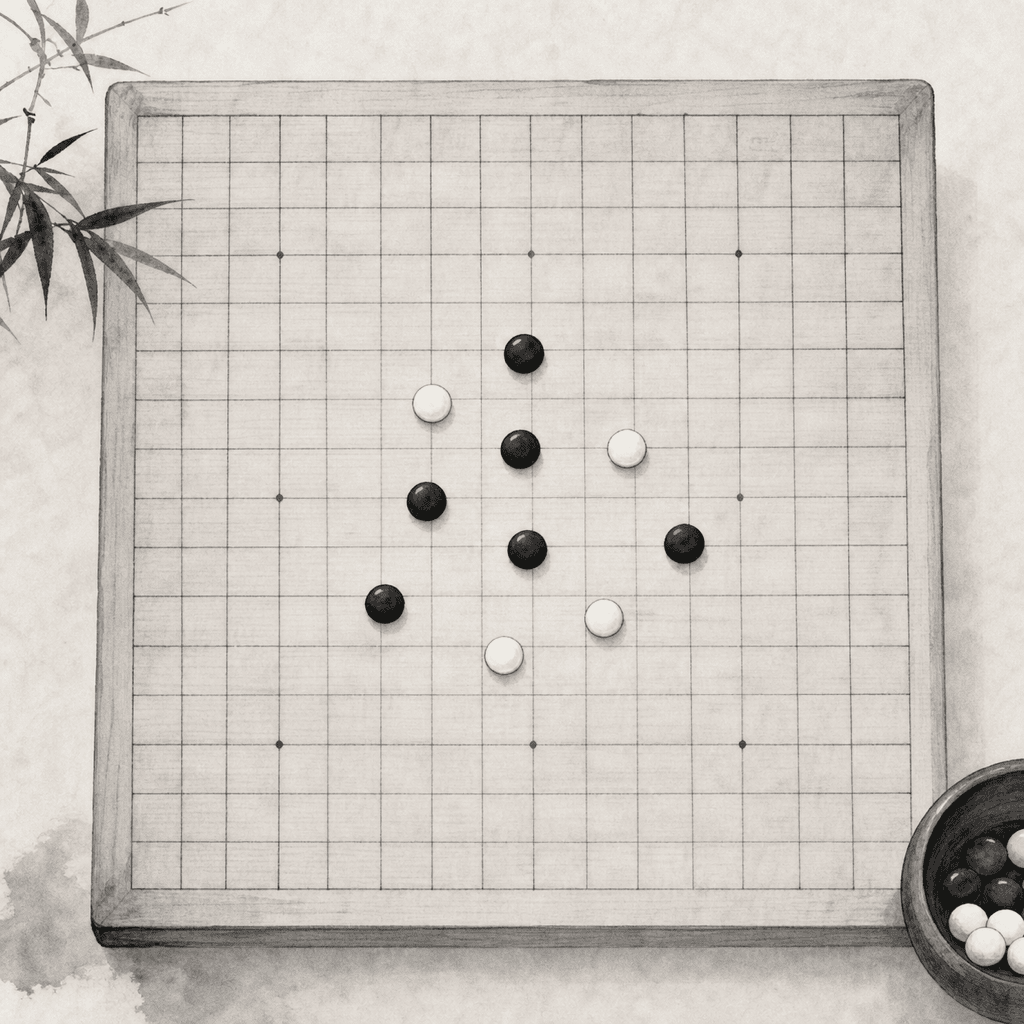
When you look at the Gomocup 2026 results table, it is natural to find the champion first. ALPHAGOMOKU, JAX, EMBRYO, these names matter. But the material most worth returning to, especially for ordinary players, is often quieter: the openings selected before the tournament began.
Beyond the Rankings, Openings Are the Foundation
Gomocup 2026 was held from June 5 to 7, the 27th edition of the Gomoku AI tournament. The official results page notes that the games ran on multiple cloud servers with matching specifications, and that fixed openings were prepared for different rule sets. The champion tells you which program was strongest. The opening setup tells you what the event was trying to measure.
That may sound like a small detail. It is not. Around the first move in Gomoku, the fight may not yet look like a fight, but initiative, space, and defensive cost are already being assigned. If an opening is too obvious, engines quickly turn it into a contest of computing power. If it is too eccentric, the result drifts too far from the logic of the game.
A Good Opening Is Not a Puzzle. It Is a Scale.
The official notes say the 2026 openings were chosen with help from several players and researchers, continuing the recent practice of preparing 12 openings for each rule set. The key word is not the number. It is chosen. An opening is not just a random arrangement of stones. It is more like adjusting the focus of the match.
Set the focus too close, and every program runs down the same forcing line. Set it too far away, and the position loses comparability. A good opening gives the strongest programs room to show themselves, while exposing weaknesses clearly enough. It lowers the noise and preserves the difference.
Machine Games Can Teach Humans Back
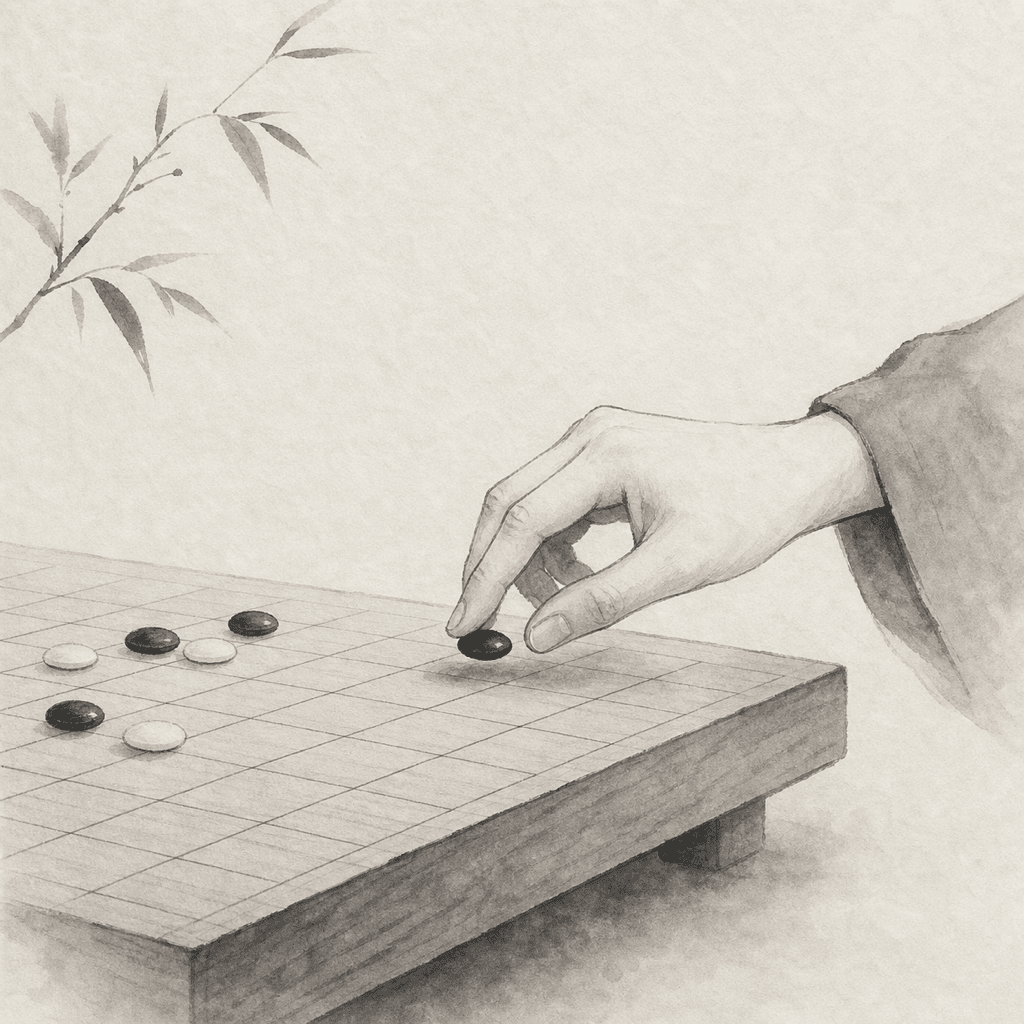
You do not need to read a full engine log. You do not need to imitate every AI move. The more useful question is this: when several programs face the same opening, where do they begin to disagree? Who expands? Who constrains? Who reinforces early?
Those disagreements are better training material than the final result. In your own games, you are rarely facing a perfect answer. You are facing similar hesitation. Should you seize the initiative here? Is the opponent’s open three really urgent? Will a point that looks elegant make your later defense clumsy?
An opening is not an answer. It is a way of asking the question.
Fixed Openings Make Comparison Fairer
Gomoku and Renju are both highly sensitive to early shape. If every game began from a completely free position, strong programs might quickly exploit first-move advantage and push the event toward repeated paths. Fixed openings remove part of that unnecessary bias in advance.
That does not make the tournament mechanical. Quite the opposite. Once the starting point is constrained, later choices show style more clearly. Some programs welcome complicated exchanges. Some prefer solid outside influence. Some wait inside the defense for the opponent to lose balance.
Use AI Openings to Examine Your Own First Moves
If you treat the Gomocup openings as a mirror, you may notice that your own first moves are often too hurried. Human players tend to think of the opening as a race to create threats, so they chase shape too early. Machines remind you that, in the early stage, flexibility may matter more.
Flexibility is not passivity. It is precise space management: giving your next move several directions, while making sure the opponent cannot defend by staring at only one line. The board may not look flashy. But it feels steady in the hand.
Opening Beauty Has Practical Value
Some openings do not look fierce at first glance, but they are beautiful. Black and white leave each other room to breathe. The center is not overcrowded. The edges still have possibilities. That beauty is not decoration. It often corresponds to a sustainable position.
The WUZIQI blog likes this angle. A board does not exist only to decide who wins. It also exists to help you understand. A calm, restrained position makes it easier to see direction, instead of being dragged around by local sparks.
Turn Tournament Material Into Daily Training
First, do not rush to study the champion program’s full game records. Choose one opening and watch how several different programs answer it. Second, record only the points of divergence, not every move. Third, move those divergence points onto your own board and ask: if I am White, where am I most afraid Black will gain consecutive initiative?
This lasts longer than memorizing variations. Variations fade. Divergence points leave a feeling in the hand. The next time you meet a similar structure, your hand will slow down, and your eyes will look for space first.
Slow the opening down, and the game becomes clearer.
This Is the Gentle Way to Use Gomocup
The results of Gomocup 2026 are already written in the table. What you can really take away is the opening awareness behind that table. It shows that strong play comes not only from calculating deeper, but from posing the problem more accurately.
Try one game tonight. You do not need to copy the champion. Choose one quiet starting point, and see whether you can soften the impatience around the first move.