
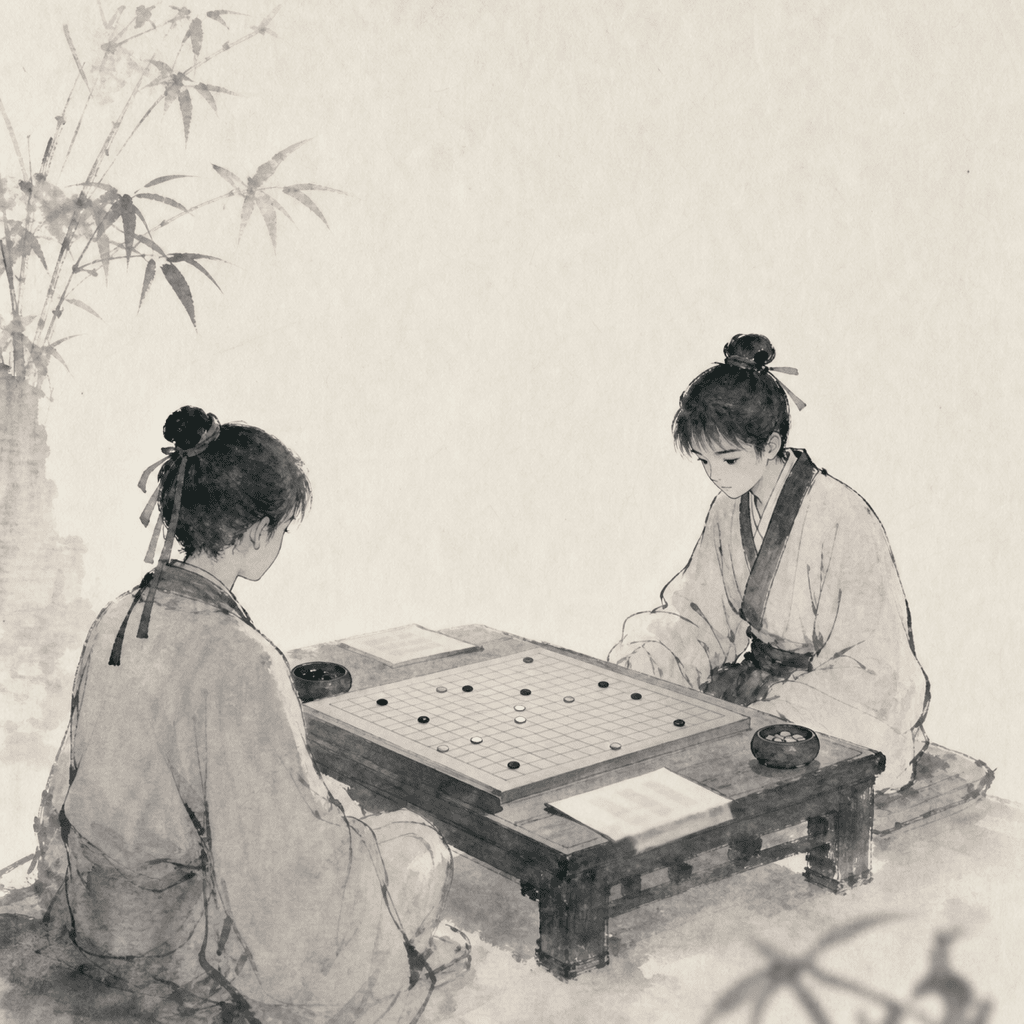
You have already seen your opponent’s open three. Still, you are one move late. Worse, under formal Renju rules, some of Black’s moves that look powerful are not legal at all. The 2026 Youth World Championship in Dalian makes the boundary plain: moving from Gomoku to Renju is not about memorizing a few more patterns. It is about relearning first-move advantage, forbidden moves, and the opening itself.
Dalian gives beginners a clear entry point
The RIF tournament calendar lists the Youth World Championship 2026 for July 5 to July 9, 2026, in Dalian, China, under the Taraguchi-10 system, marked as Rated. The RIF homepage tournament list also shows Youth World Championship 2026 Groups A-J in Dalian, dated July 5 to July 8, with the same system and rating label. On the RIF tournament page, Taraguchi-10 appears as a specific rules label. For a beginner, the first thing to remember is simpler: it turns the opening from a question of who gets the early edge into a procedure both players must accept.
That may sound like mere scheduling. For someone learning the game, it is more like a map. Place, date, groups, system, rating: all of it is stated plainly. Renju training is not just a casual game taken seriously. It enters a competitive structure that can be compared, reviewed, and accumulated over time.
The board is the same. The logic is not
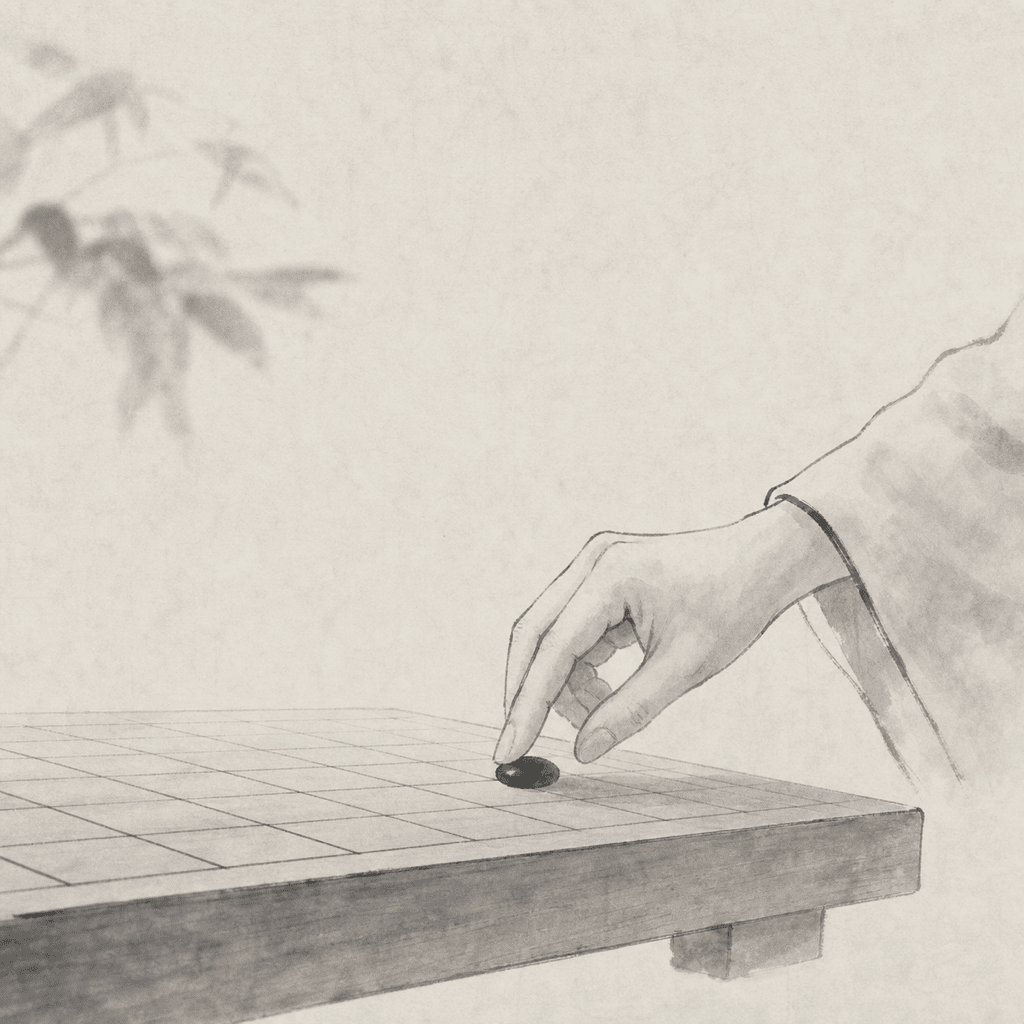
The RIF rules page is spare: the board has 15 by 15 lines, stones are placed on intersections, Black moves first and plays in the center, the players alternate, and stones already placed do not move. There is no elaborate equipment, no extra decoration.
Because the form is so restrained, the difference becomes sharper. The instinct of ordinary Gomoku is that whoever makes five first wins. Renju grew out of Gomoku, and one of its central purposes is to balance Black’s first-move advantage. The board remains quiet. The pressure has been redistributed by the rules.
The board does not change. The winning logic does
Black’s forbidden moves are the first door
For many players meeting Renju for the first time, the first stumbling block is the forbidden move. The RIF rules state that Black may not play a double-three, a double-four, or an overline. White has no such restrictions, and White may win with an overline.
That immediately changes how you calculate. Suppose Black sees a point that would create two open threes at once. By Gomoku instinct, that is a strong move. In Renju, it may be exactly a double-three forbidden move. A good move is no longer just a move with many threats. It must be legal, clean, and sustainable.
That is why the youth event is worth watching. Young players are not merely racing faster toward five. They are learning, very early, how to attack under constraint: still sharp, but not crude.
Open threes, open fours, and forks are the vocabulary
The RIF rules page lists open threes, open fours, and forks as basic tactical terms. They are not decorative jargon. They are the smallest units of reading a position.
A common scene is easy to imagine: White already has an open four, so Black must answer. On the next move, White creates a fork on the other side, bringing two directions close to five at once. If you only count stones, the position may still seem early. If you understand the hierarchy of threats, you know the tempo is already gone.
When you begin Renju, do not rush to memorize long variations. Turn every move into three questions: Is it an open three? Can it become an open four? Does it create a fork the opponent cannot block in both directions? In practice, you can also study each game by finding only the first open three, then marking whether it later became an open four or a fork.
Taraguchi-10 puts the opening in order
The system listed for the Dalian Youth World Championship is Taraguchi-10. If you are coming to Renju from Gomoku, you do not need to treat the name as mysterious. At minimum, it tells you that formal competition brings the opening into the rules, rather than letting Black take the full dividend of moving first.
This is not the same as a casual game on the street. The refinement of competitive Renju lies in the fact that it tests more than whether you can build a killing attack. It also asks whether you are willing to accept an opening procedure that has been polished by competition. The higher the level, the less anyone treats “moving first” as a natural entitlement.
Youth events show how Renju training is spreading
In the RIF recent tournament list, Dalian is not an isolated stop. Around the same period, the Czech Open 2026 appears in Pardubice under Gomoku Swap 2; the Armenian Open 2026 appears in Yerevan under Taraguchi-10; and the World Renju and Gomoku Youth Cup is listed online, also marked Taraguchi-10.
Put those names and systems together, and a modern picture comes into view: Gomoku, Renju, offline opens, and online youth cups all exist side by side. They do not cancel one another out. They lay out different paths for learning. So the Dalian Youth World Championship is not only about who wins the title. It is also worth watching how young players move from instinctive attack toward judgment inside the rules.
Start the move from Gomoku to Renju with three small habits
First, accept that Black is not simply “better because Black moves first.” Renju rules are built to address that advantage. Black’s strongest attacks must respect the boundaries of the double-three, the double-four, and the overline. The sooner you remember this, the less often you will mistake a forbidden move for a brilliant one.
Second, treat the center opening as the start of the game’s rhythm, not as a decorative ritual. RIF rules require Black to play first at the center. That means the whole game unfolds from around tengen. Lines of attack, the compression of space, and later open threes all begin to grow from there.
Third, when you review a game, say less often, “This felt bad,” and more often, “This gave the opponent an open four,” or “This created a forbidden point for Black.” As your language becomes more precise, your play will, too. Beauty is reason enough to play. But in Renju, beauty must also be legal.
If you want to use the Dalian Youth World Championship as your way in, start with the RIF rules page, then look at the Dalian tournament page and the tournament list. First make the basic vocabulary clear: the board, placement, forbidden moves, open threes, open fours. Then try one game. Do not hurry to prove that you can attack. Before every move, ask whether it is refined, legal, and able to make the next move grow stronger with less strain.