
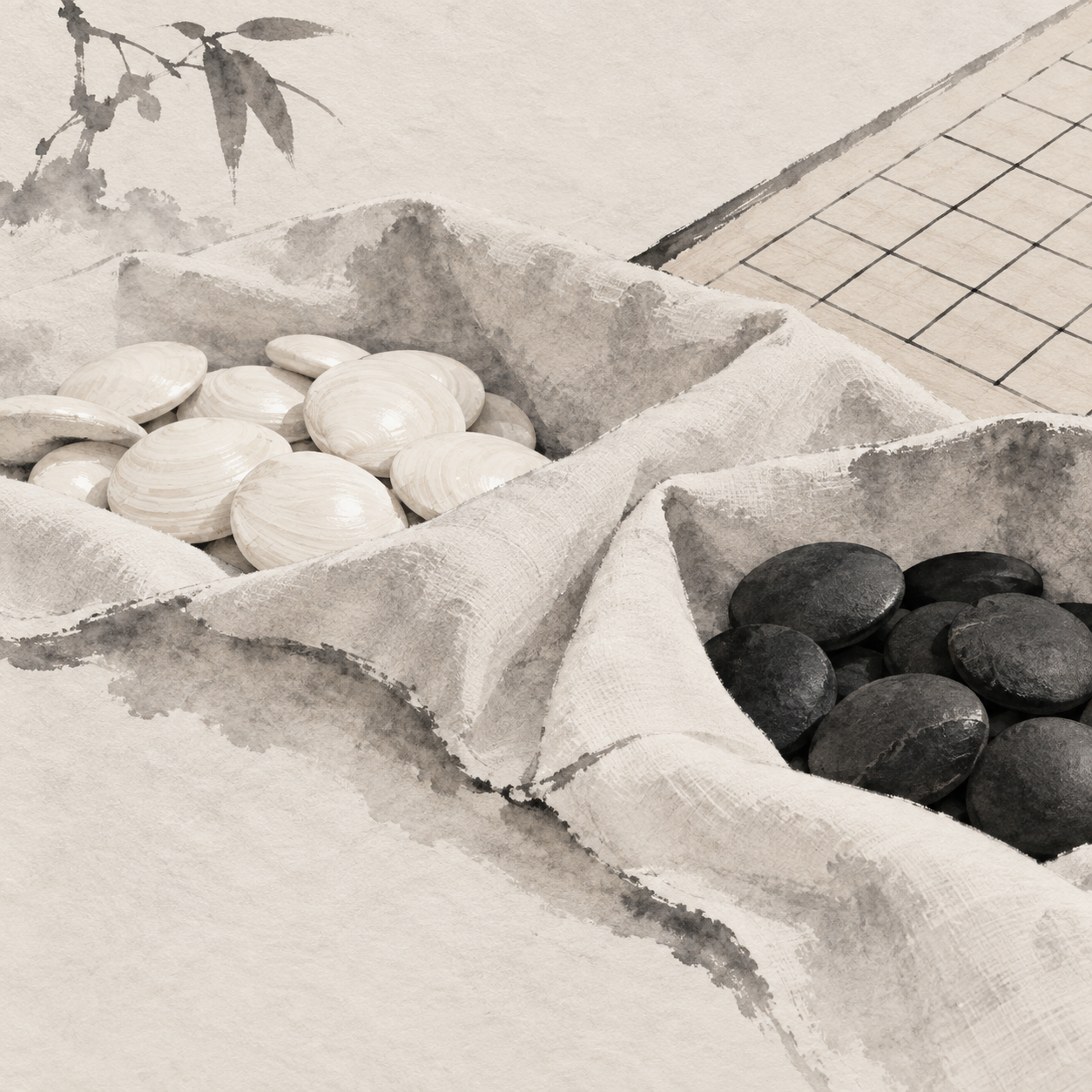
After a weekend game of Gomoku, you return the stones to their boxes. A few black ones feel oily; faint fingerprints remain on the white ones. You pick up a damp cloth to wipe the stones and board, then pause: What are these stones made of? If they are clamshell white stones and Nachiguro slate stones, they call for different care. Move them off the board and identify them before deciding whether a dry wipe will do or a wash can wait for another day.
Start with the material, not the rules
Sections 1.1 through 1.3 of the international Gomoku rules refer to black and white stones and allow crosses and circles in their place. They do not specify what stones must be made of. You need not buy expensive stones to play Gomoku at home or practice Renju patterns. This article covers only confirmed clamshell white stones, Nachiguro slate stones and, separately, the wax-finished natural kaya wood board described below. International Gomoku rules, Sections 1.1–1.3
Check the box instructions or an existing material label first. Color and weight alone cannot establish that a stone is clamshell or Nachiguro slate. If you do not know what it is made of, do not apply the washing or oiling advice below. Plastic, glass and Yunzi stones are outside this article’s scope; consult their own product instructions.
Identify the board separately, too. A cleaning method for stones is not a method for wood, and advice to oil black stones is not a step for the whole set. As you put the game away, distinguish handling marks from dirt that needs further attention—and from excess oil already on the black stones.
After a game, begin with a dry cloth
Both makers begin their care advice before play: wash your hands before handling the stones. Afterward, Kuroki Goishiten recommends wiping white stones with a dry cotton cloth; Maekawa Kaya Goban recommends a dry cloth for stones after use. For fingerprints or light surface marks, try that first. Putting away a set need not mean washing it every time. Kuroki Goishiten: stone care; Maekawa Kaya Goban: equipment care
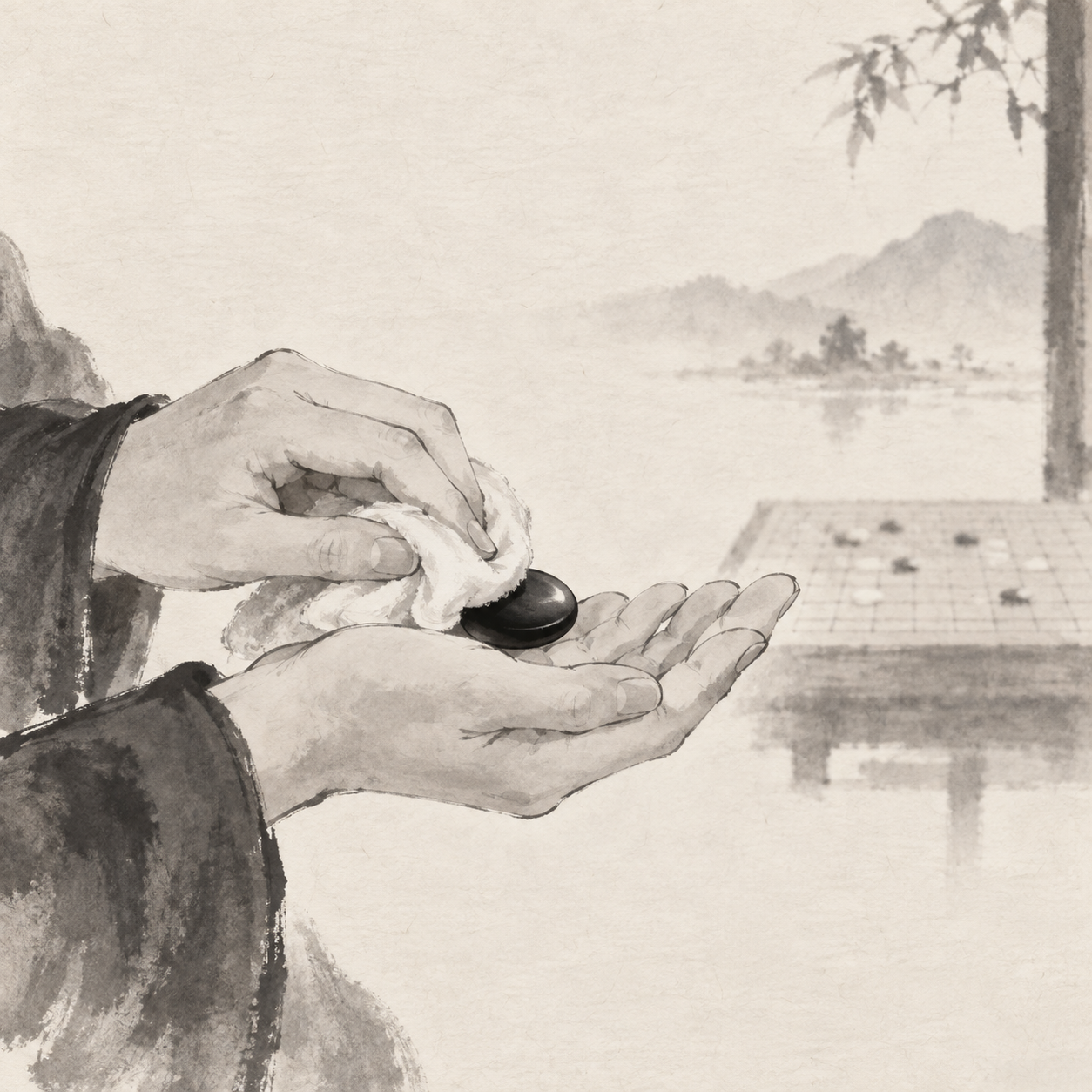
Leave some space beside the board. Pick up and wipe each stone, then set it on the other side. You can see which ones are done without rubbing the board through the stones. If the marks on a white stone come off, stop there. If visible dirt remains, treat the white stones separately as described below.
Keeping separate cloths for white stones, black stones and the board is a practical arrangement for carrying out different care steps, not an equipment requirement shared by both makers. If you occasionally oil black stones, separate cloths also make it easier to tell which one has touched oil, so you do not use it on the whites or the board.
Wash dirty clamshell whites gently, then dry them fully
There are specific occasions for washing clamshell white stones. Kuroki Goishiten lists it as a care step before long-term storage; Maekawa Kaya Goban offers similar advice when dirt on the whites is a concern. Neither calls for washing after every game. Put the stones away if a dry wipe removes the marks. If dirt remains, set aside time to wash them. Kuroki Goishiten: white stones and long-term storage; Maekawa Kaya Goban: clamshell white stone care
Both makers give the same basic steps for white stones: add a small amount of neutral detergent to water and gently wash away surface dirt. Then let the stones dry in a ventilated place, in sunlight or in the shade. Once fully dry, wipe them one by one with a cotton cloth. Neither specifies a soaking time or detergent ratio. Keep to the guidance—little detergent, a gentle wash and thorough drying—rather than inventing a timed formula.
Wash the stones away from the board, and do not use the wood surface as a drying rack. Wait until every clamshell stone is fully dry before the final cotton-cloth wipe and storage. Permission to wash the stones is not permission to take a damp cloth to the whole set. If the concern is diminished shine rather than dirt, Maekawa Kaya Goban suggests trying a dry, soft cloth first. Judge those two concerns separately.
Wipe first. Let the material determine what comes next.
With Nachiguro slate, distinguish new oil from oil loss
Nachiguro slate stones begin in a different condition from clamshell whites. Kuroki Goishiten says black stones have oil on their surfaces to prevent drying and that you should wipe it off before use. Maekawa Kaya Goban likewise notes that new Nachiguro stones may carry considerable oil; remove the excess first. If a newly unpacked black stone feels oily, wipe it with a dry cloth rather than adding another layer. Kuroki Goishiten: black stone care; Maekawa Kaya Goban: Nachiguro stone care
A whitish appearance also needs context. Maekawa Kaya Goban says that on first use, Nachiguro stones may look white as their original oil dries; a dry-cloth wipe may restore their sheen. Kuroki Goishiten separately says a little oil can be considered when black stones turn white because they lack oil. In the first situation, try wiping the existing oil. Do not assume that every whitish black stone simply has dried surface oil.
When oil is called for, Maekawa Kaya Goban advises putting a very small amount of camellia oil or baby oil on a soft cloth to wipe Nachiguro stones, then removing the excess; too much oil attracts dust. Kuroki Goishiten lists baby oil or a natural oil with less odor and stickiness, again using only a small amount on the cloth. The makers name oils somewhat differently, but the subject here remains confirmed Nachiguro slate stones.
Keep black-stone oil off whites and care for wood separately
Maekawa Kaya Goban specifically warns against using camellia oil or other black-stone oils on clamshell whites, which may yellow. That is another reason to use separate cloths and oil stones away from the board. Before the next game, wipe excess oil from the black stones. Give the whites their own dry wipe or occasional wash; do not rub them with a cloth used to oil the blacks. Maekawa Kaya Goban: care of clamshell whites, black stones and natural kaya boards
If your board is the wax-finished natural kaya wood board described by Maekawa Kaya Goban, everyday care calls only for a gentle wipe with a soft, dry cloth. Do not use a damp cloth or rub hard enough to remove the wax. This advice applies to that board, not to boards of unknown material or finish. The maker has separate guidance for a board that loses its sheen; the routine after-game steps here do not include oiling or rewaxing it.
Put the set away in this order
Before your next game of Gomoku or Renju practice at home, wash your hands. Afterward, move stones whose materials you have confirmed off the board and wipe them with their respective dry cloths. If dirt remains on the whites, wash them gently at another time, dry them fully and wipe them one by one. Wipe excess oil from the blacks. Reserve additional oil for Nachiguro slate stones only when the relevant maker’s guidance calls for it.
Finally, if you have the wax-finished natural kaya board described above, lightly wipe its surface with the soft, dry cloth reserved for it, then put away the clean, dry stones. For stones of unconfirmed material, read the instructions that came with them rather than borrowing these washing or oiling methods. After the next game, begin again with a dry wipe, one stone at a time, away from the board.