
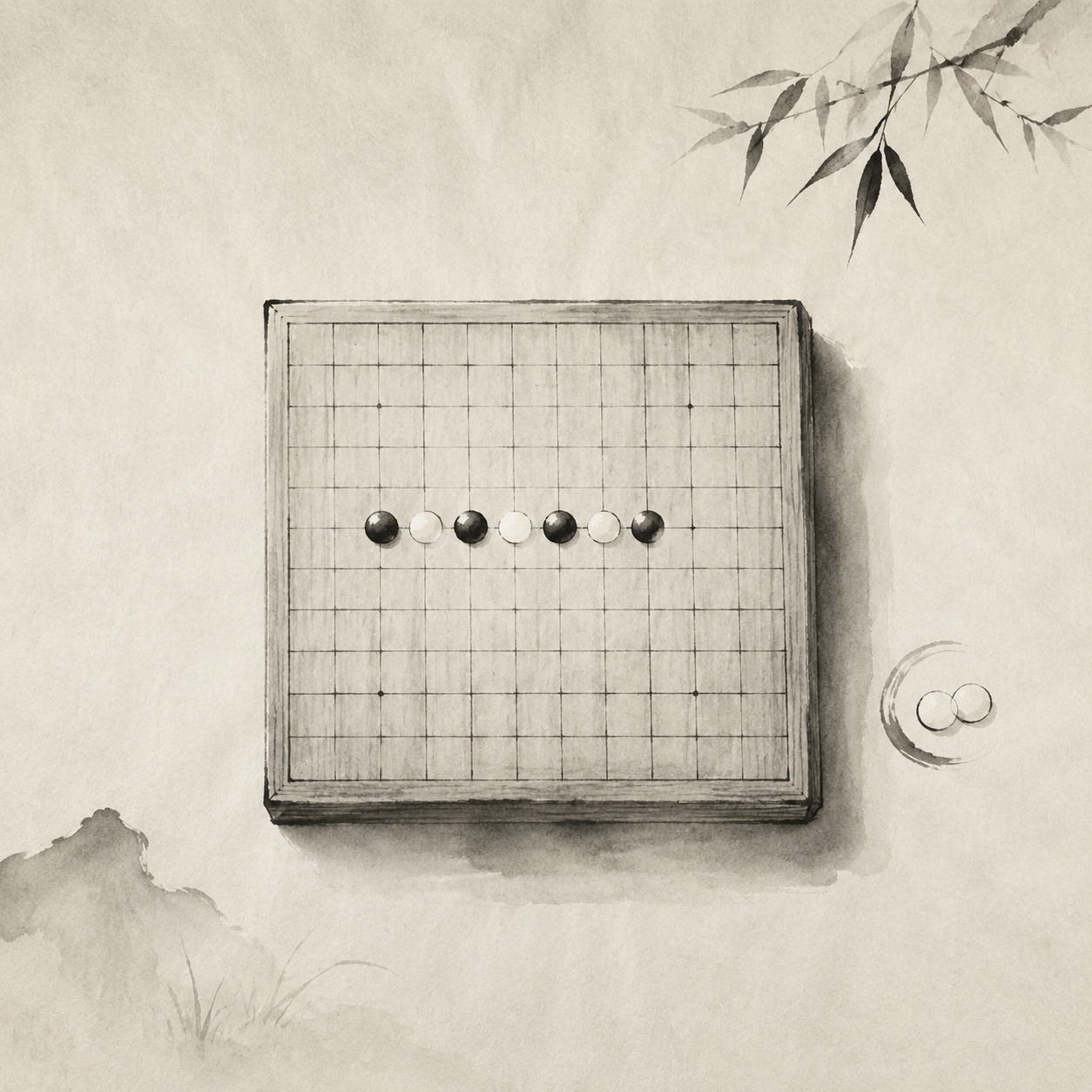
You probably think of five in a row as a single finish line. This Renju variant gives it two routes: make five in a row, or capture five pairs. The board stays familiar, but the finish changes.
The finish line is no longer singular
The rule is stated plainly on Renju.se: the first player to make a perfect five or capture five pairs wins. The game still looks like Renju or Gomoku at a glance, but the end condition now has two tracks.
That matters because a board shape is no longer only a line to complete. It is also a count of pairs to harvest. Once you read it that way, even a quiet position starts to carry two different kinds of pressure.
Black still moves first, but the rhythm changes
Ninuki-Renju keeps Black's first-move tradition from Renju. So the opening still feels familiar: one side pushes, the other side stabilizes. The difference is that the midgame can now be settled by material as well as shape.
In practice, that means a local contact fight is never just about extension. You ask whether a line can be built, yes, but also whether the neighboring stones can be taken instead.
A completed five is not always the end
Wikipedia puts it plainly: if a player makes five in a row and the opponent can capture a pair across that line, play can continue. The finish line is no longer the finish line.
Split the ending, and a second judgment appears: five in a row is only the first look; the capture possibility is the second.
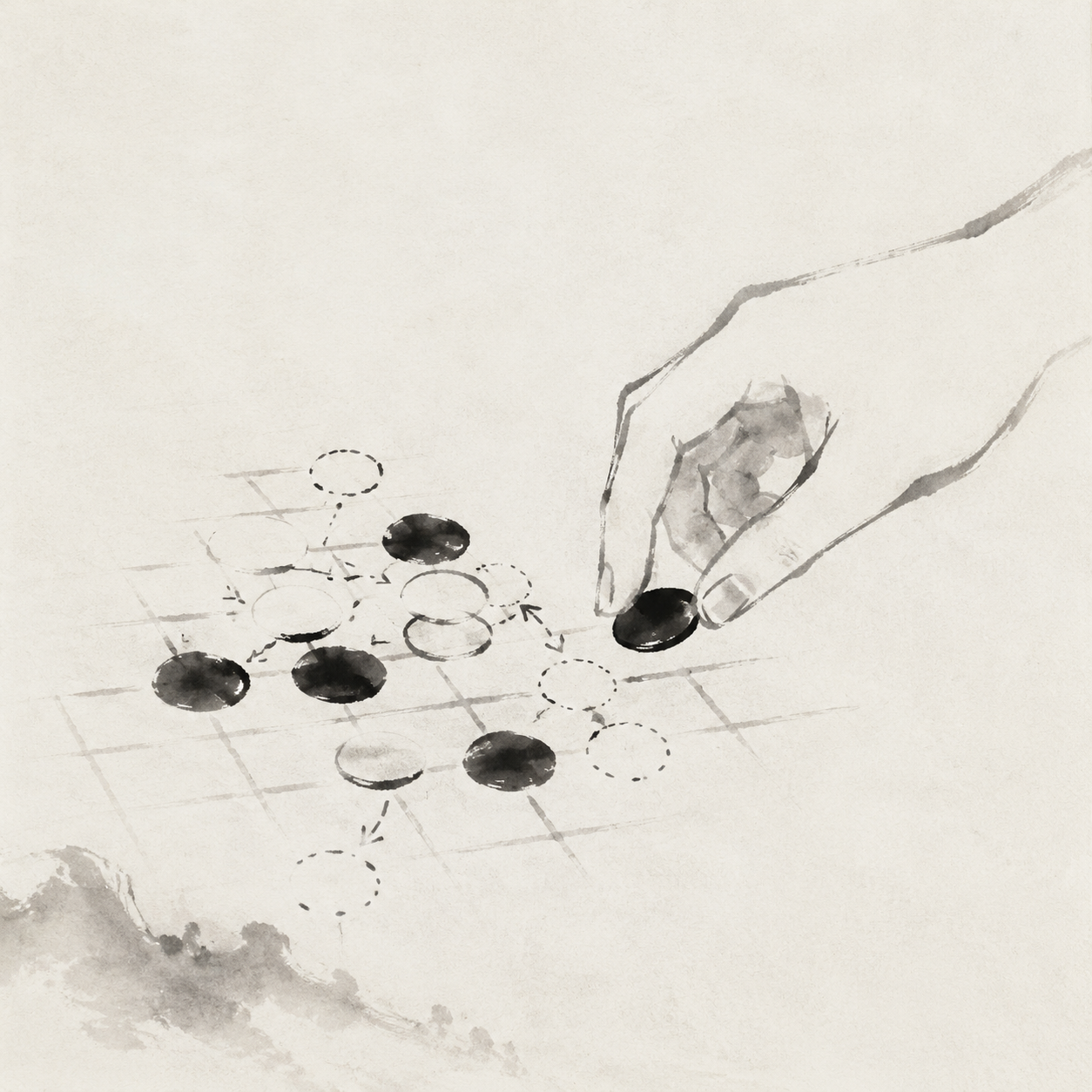
You start reading two ledgers at once
Renju already asks Black to respect forbidden moves and opening rules. This variant keeps that first-player pressure and then adds the capture endgame on top.
Every adjacent point can now serve two jobs. It may complete your shape, or it may give your opponent the hook they need to take a pair. The position becomes a balance sheet.
The win lives not only in the line, but in whether that pair can still be taken.
Why this rule is worth remembering
What makes the rule worth remembering is the change in attention order: line first, capture second. You stop asking only, "Can I make five?" and start asking what the neighboring stones still allow.
That is a more useful habit than memorizing another label. The next time you see a long line, scan the neighboring pairs before you call it safe.
A slower rule is often the clearer one
A lot of five-in-a-row games try to compress the ending into a single decisive shape. This rule splits the ending so you have to look one layer deeper.
Read it as training rather than trivia and the value becomes obvious: you learn to hold line, material, and timing in the same picture. It is slower, and clearer.