
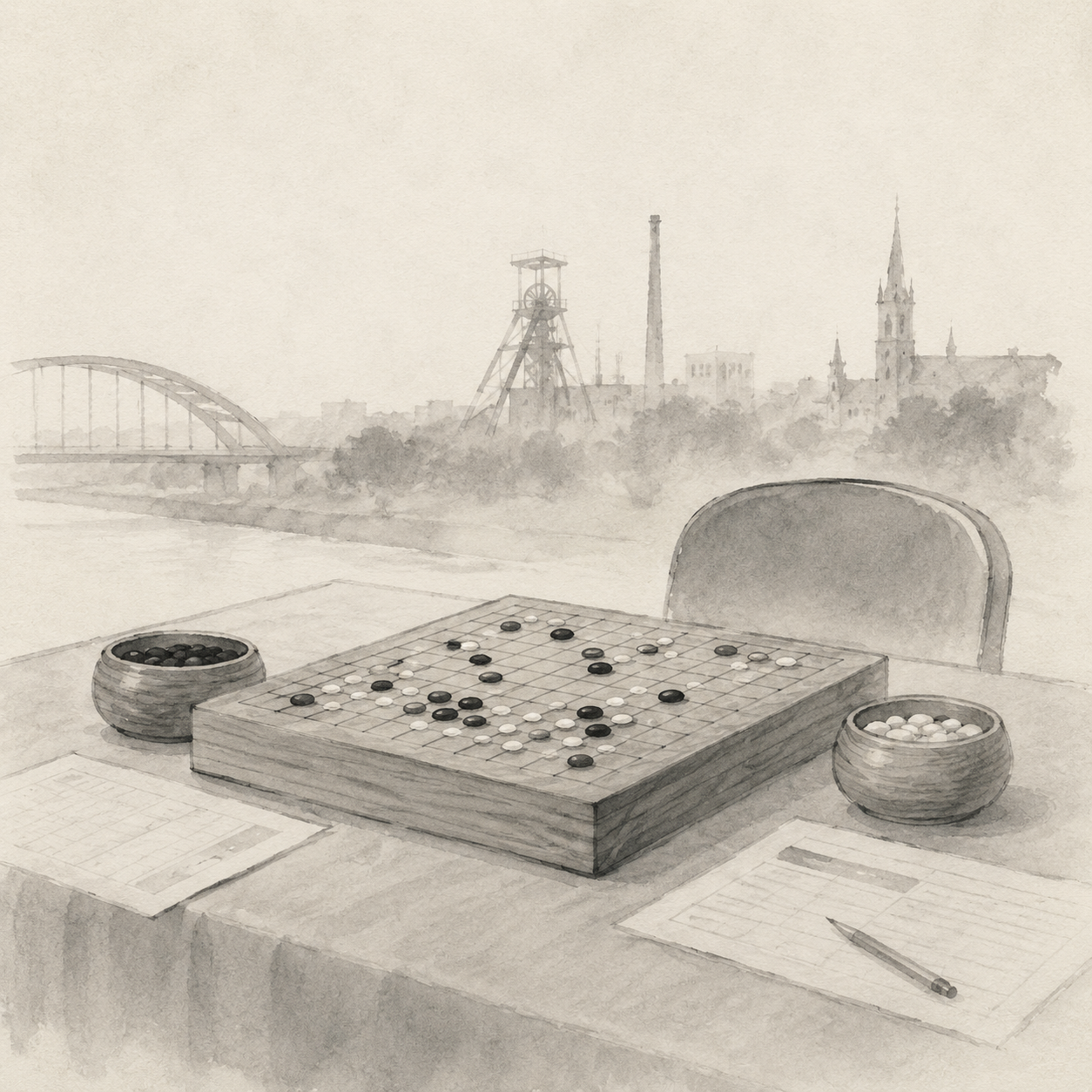
You may have studied plenty of game records online and still feel your palm tighten when you finally sit down at a real board: the clock is running, your opponent is across the table, and once the first stone lands, the whole game suddenly has weight. That is what makes Gomoku Club Cup 2026 interesting. It takes an online doorway named for a Discord community and brings it to an actual board in Ostrava, Czechia.
A Cup That Moves From Community to Board
According to the RenjuNet event page, Gomoku Club Cup 2026 is an internationally rated Gomoku tournament, scheduled for February 22, 2026, in Ostrava, Czechia. The field is modest: 20 players from 4 countries.
That modesty is part of its appeal. This is not a grand championship narrative. It is a community putting its name, rules, clocks, and seats in order so people who first met online can begin games in the same room. Good play is reason enough; turning a good relationship into a formal tournament is worth noting, too.
The event description says it is named after the Gomoku Club Discord server, and that one aim is to bring players into over-the-board competition. It is a small detail, but a telling one. Online discussion can move quickly. A move over the board has to land on an intersection. The tempo slows, and judgment often becomes clearer.
Rules That Make Every Move Feel Physical
The tournament uses Gomoku - Swap2 on a 15×15 board, with 8 Swiss rounds, 20 minutes per player, and a 3-second increment per move. On paper, that looks like a line of event parameters. In practice, it changes the breathing of the whole day.
Swap2 means the opening is not just a matter of memorized patterns. After the first three moves, choice shifts hands: whether to play black or white, whether to swap, whether to add stones. The opening begins to feel like a negotiation. You cannot think only, “Where do I want to play?” You also have to ask, “Will my opponent accept this position?”
Twenty minutes plus 3 seconds is a fascinating time control. It gives you enough room to handle critical branches, but not enough to drift forever. In the middlegame, an ordinary-looking defense against a four-in-a-row may lead into an open three, a sleeping three, and counterplay. The clock beside you is a reminder: precision is not the same as hesitation.
Eight Swiss Rounds Test Recovery
Eight Swiss rounds are not simply “a few more games.” What they really test is whether you can clear your emotions after one game and face the next pairing sheet. After a win, you can loosen too much; after a loss, you can rush. Either state can distort your first judgment.
In this format, a mistake in round one does not necessarily ruin the day, and a win in round four is not necessarily safe enough. Each game has to be treated as its own problem: Was the opening stable? Did you give away a double-three too early? Did time pressure drag a key defensive point out of place?
That is the modern virtue of the Swiss system. It lets more players meet opponents near their own score group within a single day. The event is not a simple elimination bracket; it is a gradual calibration. Final standings come not only from the sharpest game, but from a whole day of composure.
The over-the-board feel comes from the fact that nothing can be taken back.
Behind the Standings, a Narrow Scoreline
The final standings show Igor Eged of Slovakia finishing first with 6.5 points. Adam Horvath took second with 6 points, and Jan Vaněk third with 5.5. The top three were separated by only half a point to one point, which says there was little margin for error at the end.
Half a point in a Gomoku tournament can look quiet, but it weighs a great deal. It may come from a difficult hold for a draw, or from failing to turn an advantage into a win. To a spectator, the table is a row of numbers. To a player, it is the sum of every pause, every long think, every stone placed across the day.
The tournament drew 20 players from Czechia, Hungary, Poland, and Slovakia. That mix also makes it feel like a Central European gathering of Gomoku friends: not a distant professional stage, but something close enough to reach by car, ticket, and a walk into the playing hall.
Organization Is What Makes an Event Real
The event is organized by Česká federace piškvorek a renju, with Petr Podolský as chief arbiter and Alois Mikeš as pairing officer and tournament director. These names are not just footer text. Whether an over-the-board tournament runs smoothly often depends on work that looks almost invisible.
Pairings have to be clear, rounds have to start on time, rule explanations have to be consistent, and results have to be traceable. When you sit down, you want to think only about the game, not about whether the process is reliable. A well-polished tournament room absorbs the noise and lets the board become the clearest object in it.
The event is also listed as open to everyone, with lower fees for players under 18 and for newcomers. That is a plain arrangement, but a meaningful one. If over-the-board competition belongs only to familiar faces, the community slowly narrows. If newcomers can sit down at a lower threshold, the next pairing sheet gets new names.
From Online to Offline, the Game Becomes More Real
The virtue of an online community is lightness. You can post a diagram at any moment, ask about a variation, arrange a training game. The virtue of an over-the-board tournament is the opposite: it is heavy. You have to register, show up, and hand over your judgment within a fixed time.
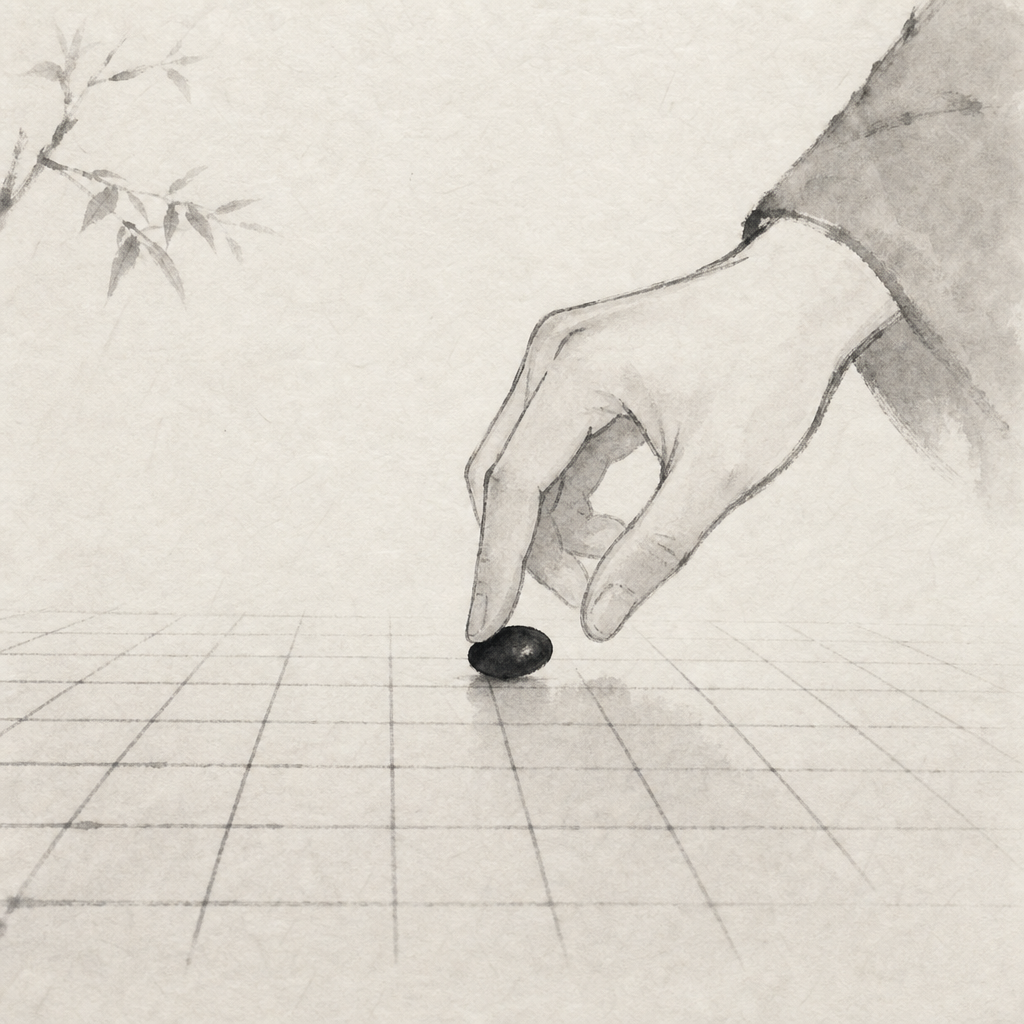
That weight changes the expression of the game. Online, you can drag the mouse back and forth to check a point again. Over the board, you confirm it with your fingers, your eyes, and your memory. Once the stone lands, the position becomes fact. The feel of the game is not only the material of the stones. It is the sensation of a decision that cannot be undone.
That is why Gomoku Club Cup 2026 is worth watching. It matters not because it is the largest event, but because it translates the connections of a modern community into a formal gathering with rules, arbiters, and standings. It is a graceful translation.
Next Time You Read a Tournament Table, Read More Slowly
Tournament news is easy to read as a result: who finished first, who finished second, how many people played. But if you read more slowly, there is more inside it: how the opening rule shapes risk, how the time control compresses judgment, how the Swiss system asks players to emerge from the previous game.
The Ostrava cup offers more than a standings table. It offers a portrait of over-the-board Gomoku: moderate in scale, clear in procedure, rooted in a visible community, with players close enough to one another and boundaries formal enough to matter.
If you are used to studying game records online, choose a game with a similar time control and play it seriously. Do not hurry to turn it into a “training task.” Let the clock run. Let your hand place the stones. See whether you can keep your calm inside a real rhythm.