
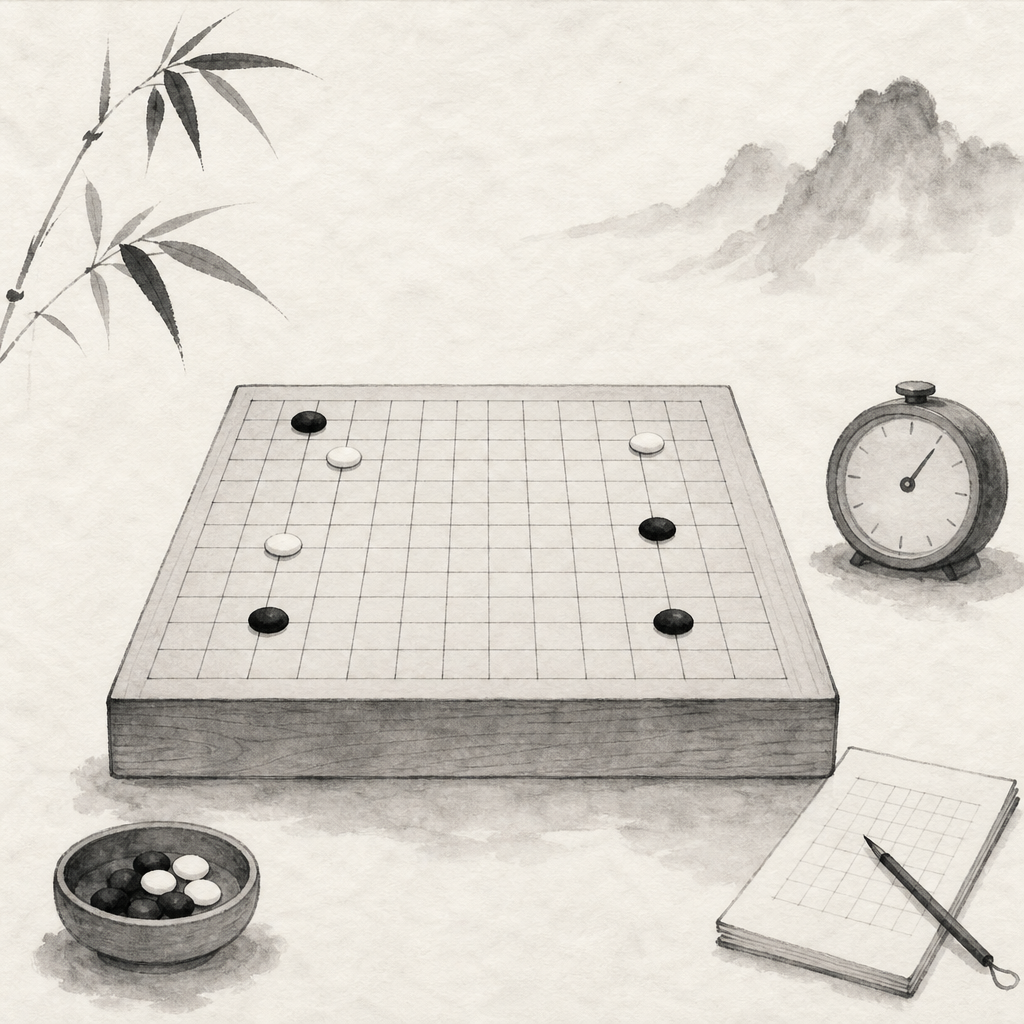
Do you often feel uneasy after only a dozen moves in the opening, not because you made some spectacular mistake, but because your opponent is already steering the game? BrnoCup 2026, held in Brno on May 16, puts a very useful review question on the table: why does Swap2 help beginners feel the weight of the opening earlier, instead of merely memorizing a few patterns?
BrnoCup 2026 Is Not Just About the Schedule
The seventh BrnoCup will be held in Brno, Czech Republic, at Antoninska Elementary School. The format is plain enough: Gomoku Swap2, Swiss system, with a time control of 20 minutes plus 3 seconds per move. It does not feel as distant as a major championship. It feels more like a board set close in front of you.
The event page specifically notes that beginners are welcome, and that the tournament has an educational character. That detail matters. When an open tournament welcomes newcomers and still chooses Swap2, it is treating the opening rule not as a barrier, but as a teaching tool.
The basic goal of Gomoku is direct: make five in a row along the lines of the board. But the more direct a rule is, the more pressure tends to gather at the beginning. First move, the center, the first cluster of threats, all of them shape the feel of the whole game very quickly.
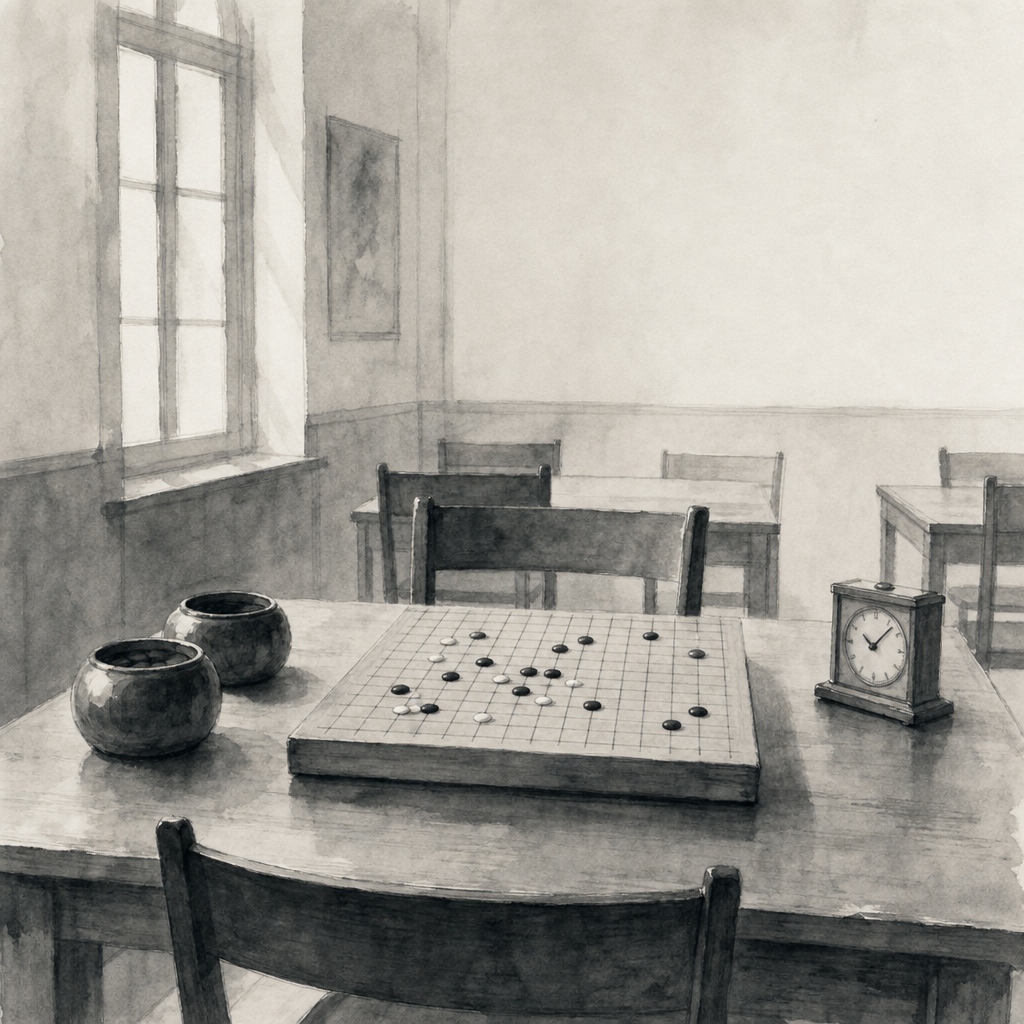
Swap2 First Asks Both Players What Feels Playable
In ordinary games, beginners often understand the opening as “I should take a good point first.” The subtlety of Swap2 is that it makes ownership of the opening less automatic. You cannot think only about what feels comfortable for you; you also have to consider whether your opponent would be willing to take it over.
A common Swap2 procedure begins with an initial position. The other player may then choose to play black, choose to play white, or add more variation before the opponent chooses colors. Tournament details can differ according to the rules in force, but the central idea is the same: the opening should not clearly favor one side.
This changes the psychology of the first moves. What you place on the board is not a “trap,” exactly, but an offer. If it is too strong, your opponent can take the stronger side; if it is too weak, you may be forced to live with the weaker one. A good opening therefore becomes more restrained.
A good opening is not a bargain grabbed early
Beginners See Balance More Clearly in Swap2
Many newcomers to Gomoku are intimidated the first time they hear terms like open three, four-in-a-row, and double-three. They are important, of course. But if the opening is already badly unbalanced, the later terminology can feel like repairing a house that has already begun to lean. Swap2 moves your attention earlier.
Suppose, for example, that you build a very attacking-looking shape near tengen and think to yourself, “This must be strong.” Swap2 forces you to ask one more question: if my opponent chooses this side, do I still trust myself to defend against it? That counter-question is more useful than memorizing an answer.
What it trains is a modern, unhurried kind of judgment. Not every move has to be sharp. Not every shape has to maximize attack. The closer the opening is to a range both players can accept, the more the later calculation begins to feel like a game of chesslike choice rather than a one-sided chase.
The Swiss System Lets Learning Happen Across Games
BrnoCup 2026 uses a Swiss system, which is also friendly to beginners. You do not lose one game and go home. Instead, over several rounds, you keep meeting opponents near your current level. Each round offers a fresh calibration of your opening judgment.
The time control of 20 minutes plus 3 seconds is also well suited to studying openings. It is not so slow that you drift into abstraction, and not so fast that you can only move by feel. You have to make a judgment within limited time, and then live with its consequences.
From Open Three to Double-Three, Threats Need Opening Context
The phrase open three can make it sound as if creating one is automatically good play. In real games, an open three depends on direction, distance, move order, and whether the opponent has a more urgent counterattack. Under a Swap2 opening, these threats are placed inside a framework of balance from the start.
The same is true of double-three. Beginners often treat it as a tactical button that suddenly appears, while overlooking the shape that had to be prepared beforehand. If the first few moves were too greedy, the supposed double-three may only look busy; if they were too scattered, the chance may never appear at all.
A sense of balance lasts longer than a pattern
Three Small Things to Watch
First, watch how close the initial structure is to the center. The center is not a universal answer, but it affects the directions in which a position can develop, and whether later threats can connect easily. Every small shift near tengen expresses a distribution of risk.
Third, watch which layer the losing player loses on. If it is simply a missed calculation in the middlegame, that is a tactical issue. If, after a dozen moves, there is already no comfortable defensive point, then the opening offer itself may have been flawed. Separate those two kinds of mistakes, and review becomes clearer.
Treat BrnoCup as an Opening Lesson
Swap2’s answer is not complexity for its own sake. It is to let both players help define the complexity. It turns “I want to play this way” into “Can both sides accept this position?” That step is small, but it makes the opening more refined, and closer to a real conversation.
If you plan to watch this tournament, or if you simply want your own openings to become a little quieter, try a game of Swap2. Do not rush to prove that a particular pattern is correct. First practice judging whether a position is worth being chosen by either side.