
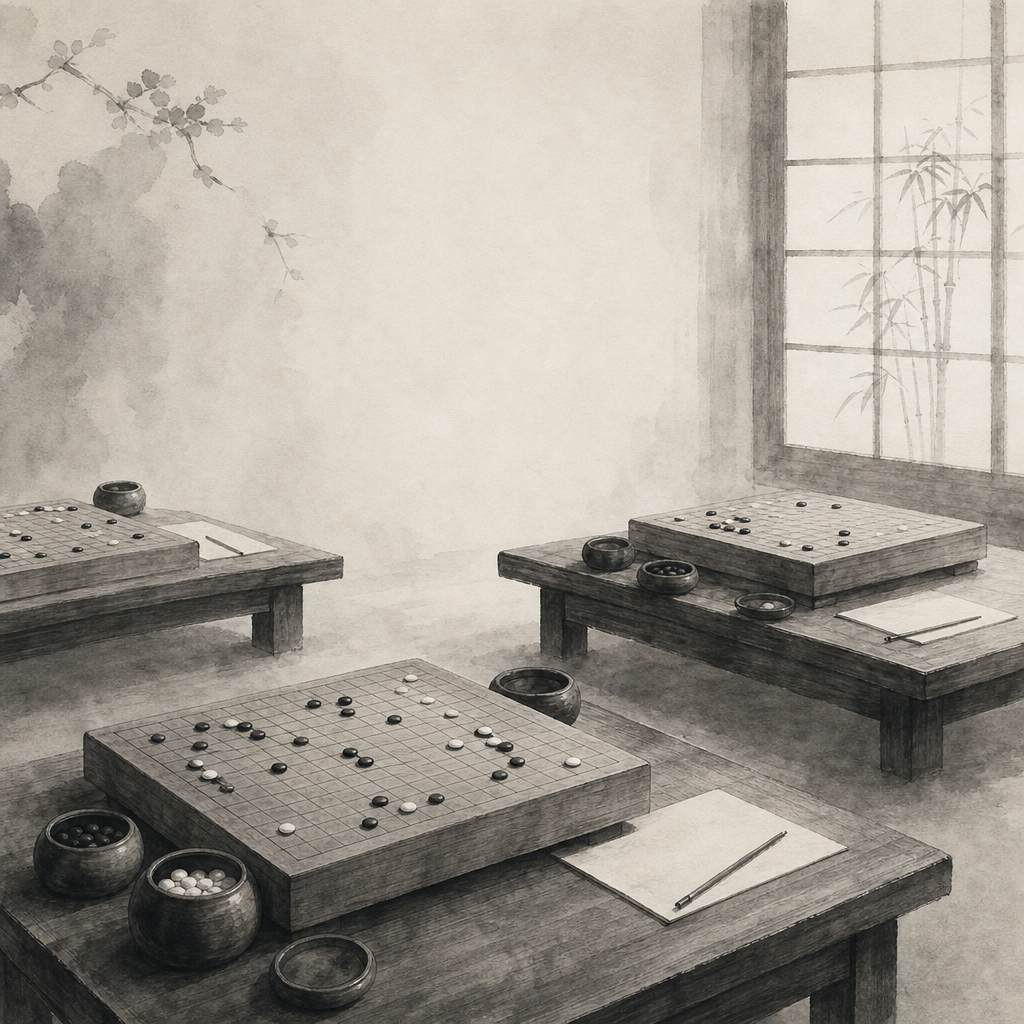
You may know the feeling: the longer a schedule gets, the easier it is for the important things to disappear under the dates. In summer 2026, Yerevan, Armenia, will host the Renju Team World Championship and then the Gomoku Team World Championship. Rather than rush to name a favorite, I want to read the rules, the intervals, and the team rhythms quietly. A board can be calm. News can be read with care, too.
One city, two neighboring schedules
RenjuNet’s 2026 event calendar lists the Renju Team World Championship from August 8 to August 16 in Yerevan, Armenia, under Taraguchi-10 rules and marked as rated. Immediately after, the Gomoku Team World Championship runs from August 15 to August 19, also in Yerevan, under Gomoku - Swap 2, and also counts toward ratings.
That means the two events are not isolated headlines. They are more like two adjacent game records. August 15 is the natural overlap: the Renju event is drawing in, while the Gomoku event is beginning to open out. For anyone watching, those days will be dense.
If you look only at the rankings, the story gets thin. Put time back onto the board, and you begin to see how teams adjust their breathing across consecutive games, postmortems, and opening preparation.
Renju is not a substitute for Gomoku. It is the branch with forbidden moves
RenjuNet’s rules explanation puts it plainly: Renju developed from Gomoku, but to balance Black’s first-move advantage, Black is subject to several restrictions. The common shorthand is that Black is forbidden to make a double-three, a double-four, or an overline.
Those terms can sound like clauses in a rulebook. On the board, they become very concrete. If Black forms two open threes at once, a beautiful pressure move in ordinary Gomoku may become a foul in Renju. Rules are not decoration. They change the feel of the game.
Rules change the game’s breathing
So the two team events sitting side by side are not just an extra trophy. They place similar shapes inside two systems of judgment: one asks you to skirt forbidden moves; the other asks you to seek a fair opening under a swap rule. Once you see that, the matches gain another layer.
Taraguchi-10 turns the opening into team engineering
The Renju Team World Championship will use Taraguchi-10. Even without unpacking every detail, you can start with the main point for watching: the opening is not simply a race for tengen or the first move. It is a procedure built around balance, choice, and depth of preparation.
In a team event, that procedure magnifies differences between teams. One player’s over-the-board inspiration matters. But what matters more is whether the whole team shares a language around the same set of openings: where you can slow down, where pressure must be exchanged at once, where a quiet-looking shape hides the risk of a double-three.
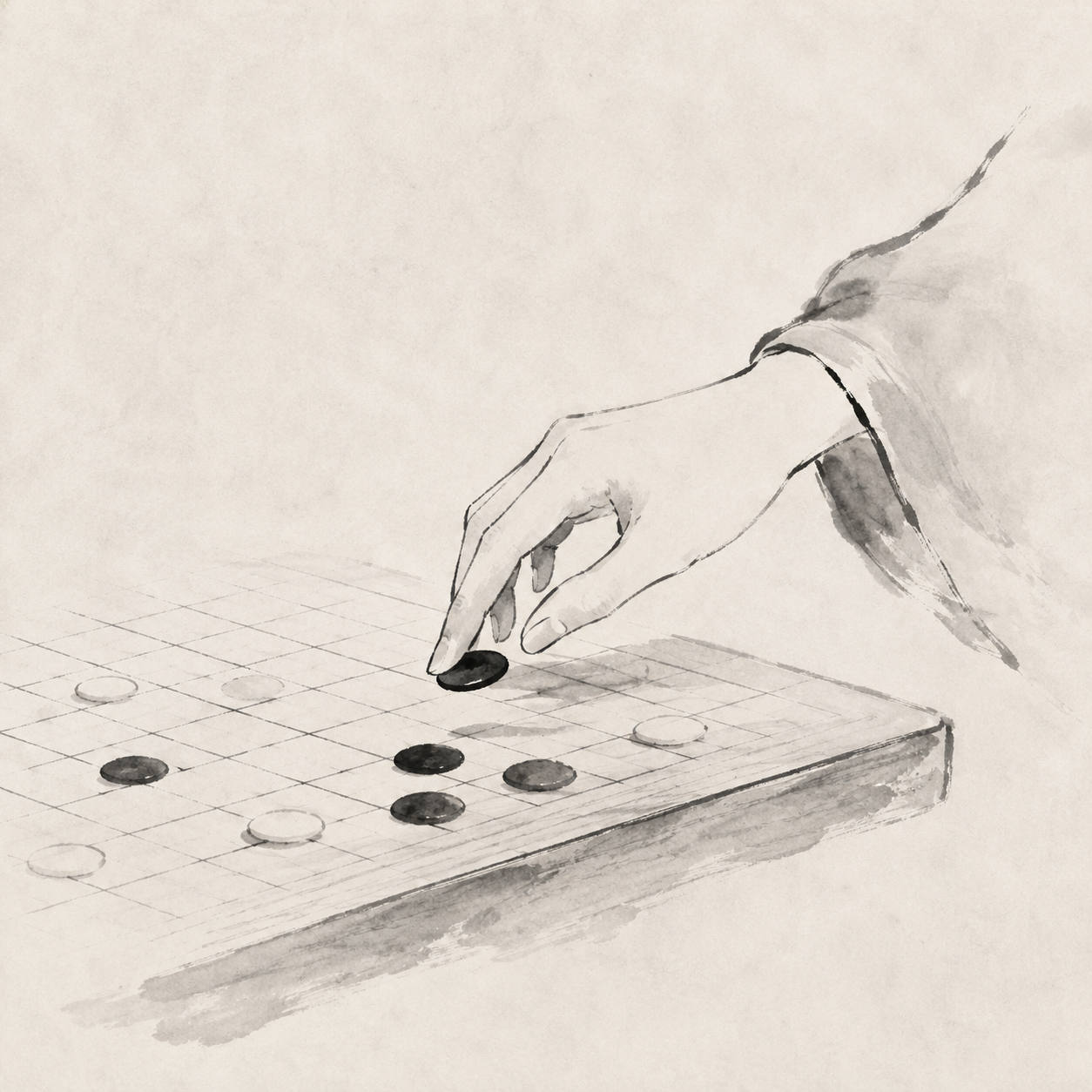
I will be watching the first round and the final two rounds especially. The first round often reveals the range of preparation. The final two reveal stamina and trust: when a teammate needs a stable game, will the player still choose the restrained defensive move?
Swap 2 turns Gomoku’s first move into a negotiation
The Gomoku Team World Championship will use Gomoku - Swap 2. Its basic viewing logic is clear: the opening is not a way for one side to lock in an advantage, but a process of placement, choice, and choice again, bringing both players closer to a fair starting point.
That makes the first few moves around tengen feel more like a negotiation. If an opening is too strong, the opponent will take it. If it is too weak, you have handed away the initiative. The beauty lies on that edge where neither side overreaches and neither side gets cute.
For a team event, Swap 2 also changes the division of preparation. Someone designs openings. Someone tests the middlegame. Someone, in actual play, has to turn a complex position into a clear killing point. A team is not just five individual-event players added together.
The overlap will test postmortem speed
The August 15 overlap is worth reading closely. The Renju schedule is reaching its end; the Gomoku schedule is just starting. Information, stamina, and attention will all tighten. If players or coaching staffs are following both events, the speed of postmortem analysis becomes an invisible variable.
A team postmortem is not only about asking, “Where was this move wrong?” The more practical questions are these: has this kind of open three appeared in the team files; will this defensive shape induce a double-four; can the next board avoid the same rhythm? News stories do not often write about these things, but wins and losses often become fine-grained right here.
An active season gives the rankings some warmth
RenjuNet’s homepage also shows many events, junior qualifiers, and world-ranking materials from May through July 2026. That context matters. The team worlds are not a standalone summer point appearing out of nowhere. They are a high place in an active season.
The ranking database gives you a modern way to watch. You can trace a player’s path, but do not treat the number as the conclusion. The more interesting questions are where the player has competed lately, what rhythm they used to win, and whether, in key games, they chose the steadier variation.
Numbers are cold. The game is not. A careful reading of the season should allow rankings, rules, and board positions to illuminate one another.
Read these team worlds with fewer predictions
Pre-event predictions are lively, of course. But team events reward slower reading. Start with the rules, then the schedule. Start with the opening system, then watch how teams allocate risk. Read this way, the wins and losses do not matter less. They gain texture.
I will think of the two 2026 events in Yerevan as a neighboring exhibition of rules: Renju trims the first player’s edge with forbidden moves; Gomoku polishes opening fairness with Swap 2. Both remind you that beauty is reason enough.
Read the rules before the result
If you plan to follow this stretch of the calendar, begin with a single game. Choose one team match. Note the opening, the boundary of the forbidden moves, and the team score. Come back in the next round, and you may find that the news has quieted down and the sound of the stones has become clearer.