
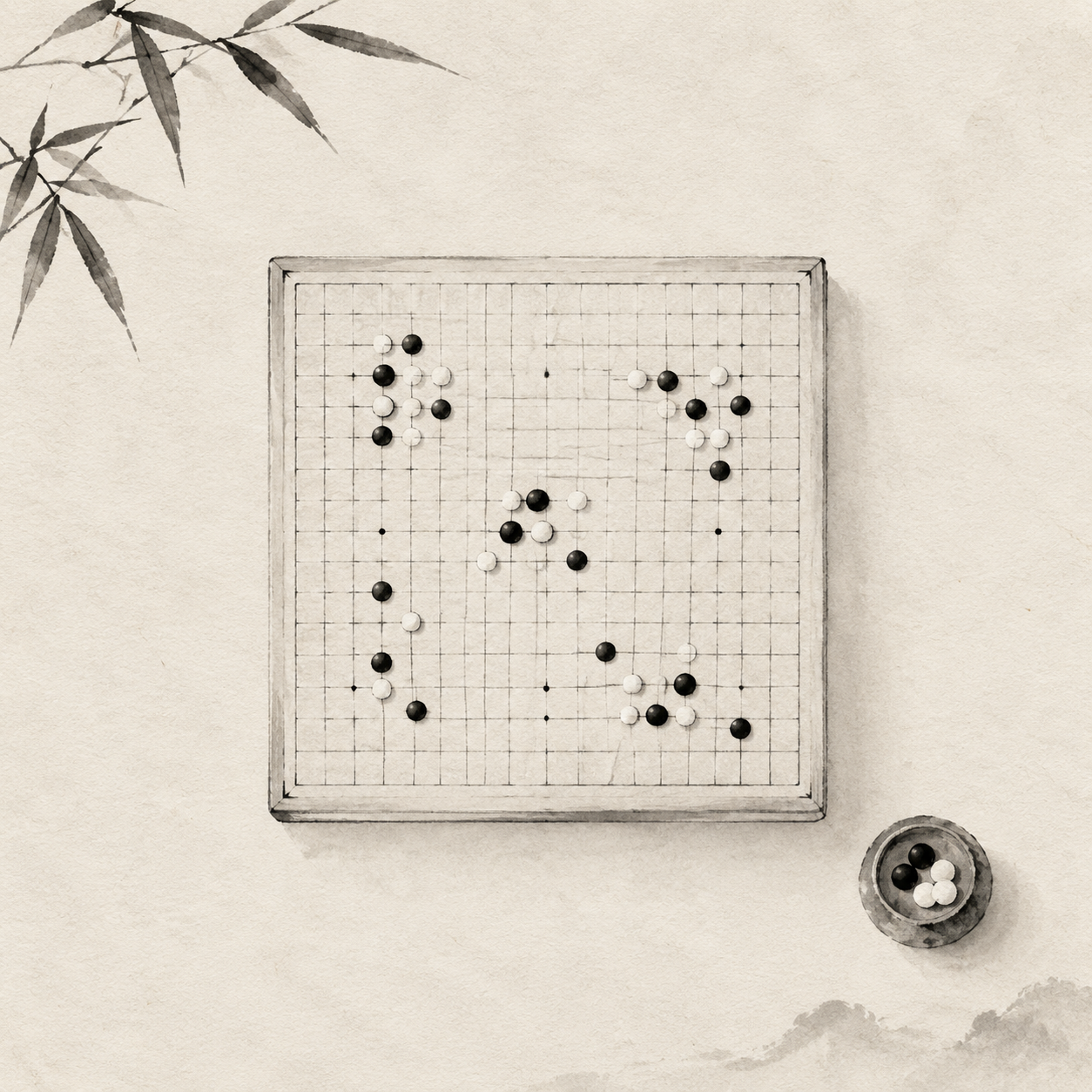
When you review a good game, the first thing that slows you down is often finding the move. Without coordinates and direction, commentary, notation, and comparison all take a detour; the rhythm of the game drifts while you search.
Turn the board into something you can read
Gomoku is often discussed on a 15×15 board. Edge cues turn a move from a visual spot into a place you can say out loud, which makes notation and teaching smoother.
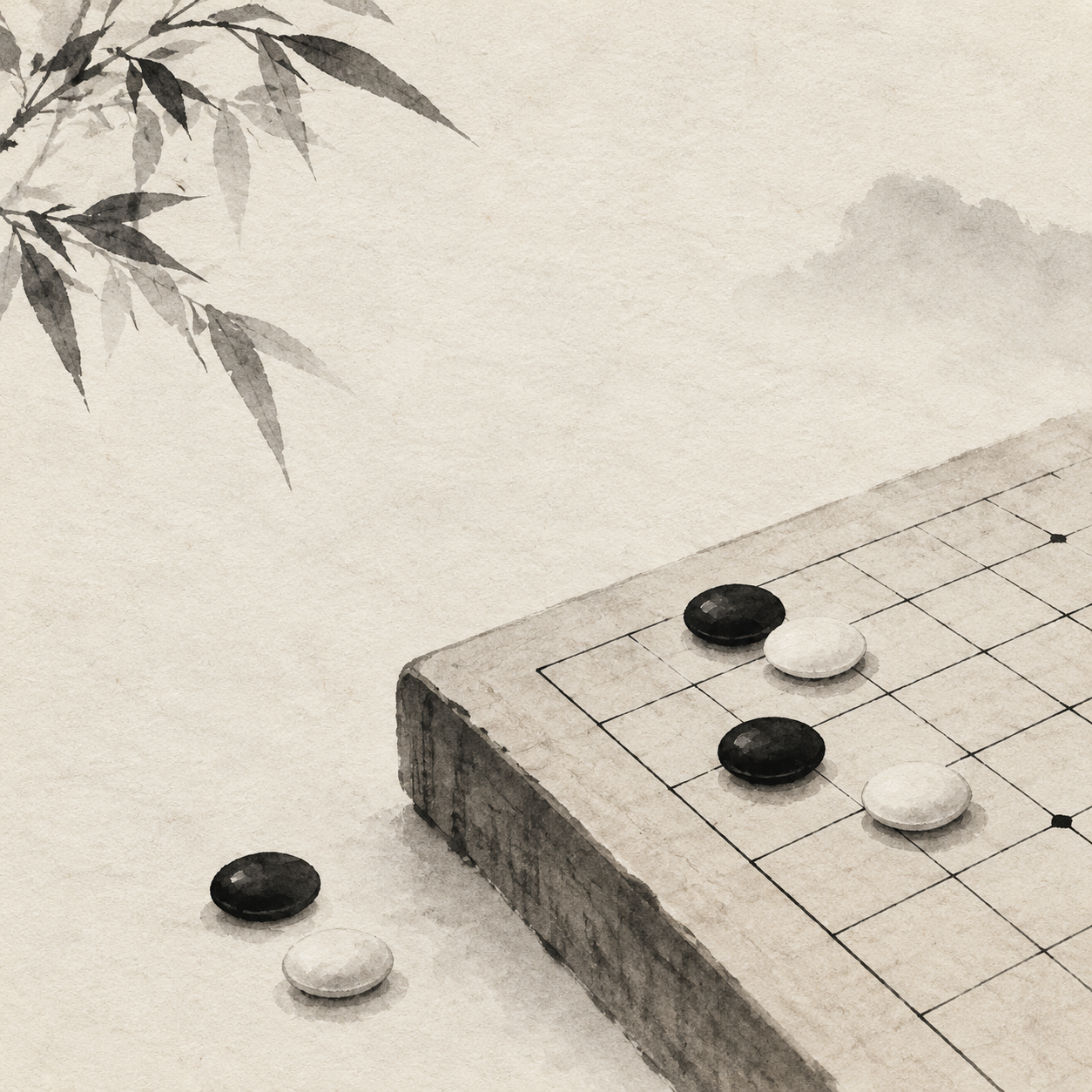
You can write a move as “third column from the upper left, seventh row” instead of relying on a vague pointer. The coordinates serve communication first, review second.
Coordinates are not a luxury for experts
For a beginner, the hardest part of the first game record is not tactics but the fact that terms and direction appear at the same time. Stable numbering on the border lets teaching start with judgment instead of orientation.
Once the edge information stays consistent, it becomes much easier to compare different coordinate habits.
Beginners benefit most. Recognize the board first, then learn the rules, and the path gets shorter.
Coordinates fix a game in place.
Orientation keeps review from drifting
Arguments often happen on the image itself: is this board upright, rotated, or mirrored? Without direction cues, the same move can look like it landed somewhere else.
When screenshots and commentary come from different devices, direction cues pull them back to the same board.
Visual cues should stay light
Good coordinates only need enough contrast at the edge for the eye to catch them when needed. Color, line weight, and white space can help, but the goal stays the same: reduce guesswork.
The best coordinate design is often the one you barely notice. It is present when needed, and quiet when it is not.
Notation and explanation both become easier
For notation, coordinates give every move a name; for teaching, they let a board be described out loud; for sharing, they save people from asking which square you meant.
If you are reading a public record, start with the edge, then read the interior.
- Less guesswork in notation.
- Less redrawing in teaching.
- Less arguing in review.
Good coordinates serve three scenes at once
When you play, they pin a move down. When you watch, they help you compare. When you teach, they shorten the explanation.
Many boards keep edge information restrained and never omit it. Readability comes from keeping what should stay.
Clear coordinates do not make a board louder; they make discussion easier.
If a board can be identified accurately, a game becomes easier to store, discuss, and continue. Clear coordinates and direction cues do not make the surface louder; they let the game stay where it was when people talk about it later.