
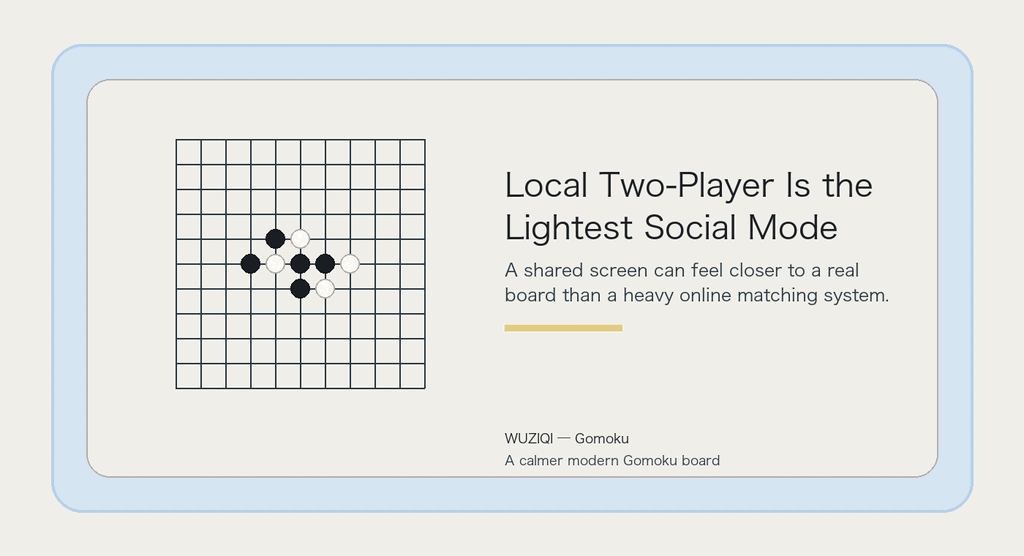
Not every social feature needs accounts and matchmaking. Local two-player returns Gomoku to the table: two people take turns, and the screen becomes a shared board.
Slow the board down first
Useful practice is often not about playing faster. It is about giving yourself one more second. That second turns impulse into choice and breaks a complex position into smaller questions.
See lines, not only stones
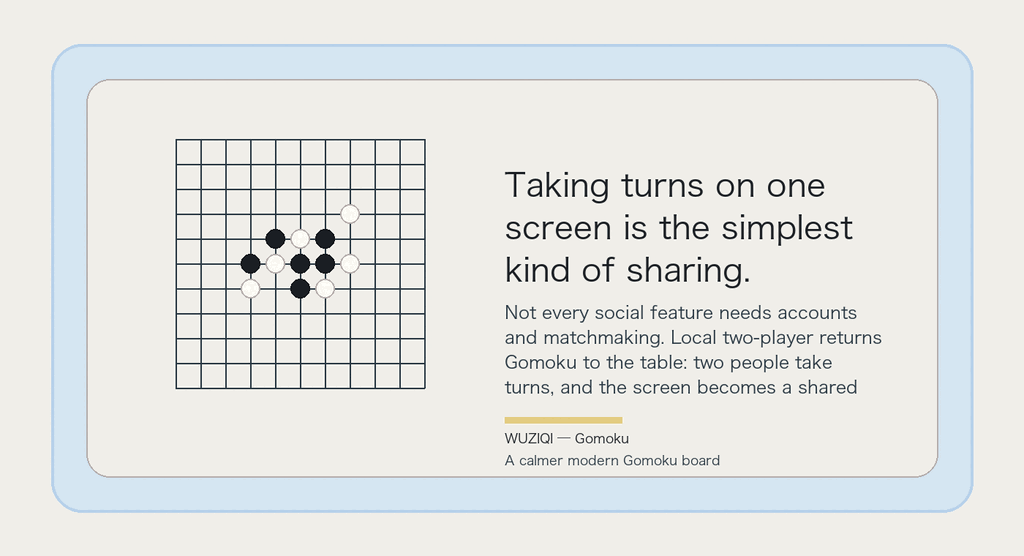
The key is not one stone by itself, but the lines it forms with the others. Rows, columns, and diagonals all need a turn. Once you read lines, danger appears earlier.
Put the next move in context
A good move is not an isolated pretty point. It should answer one question and leave the next one. Keep connections while defending and keep transitions while attacking.
When the board gets quieter, judgment rises to the surface
Calm is not conservative
A calm move does not avoid complexity. It places complexity where you can handle it. When threat, space, and tempo align, the position can become sharp.