
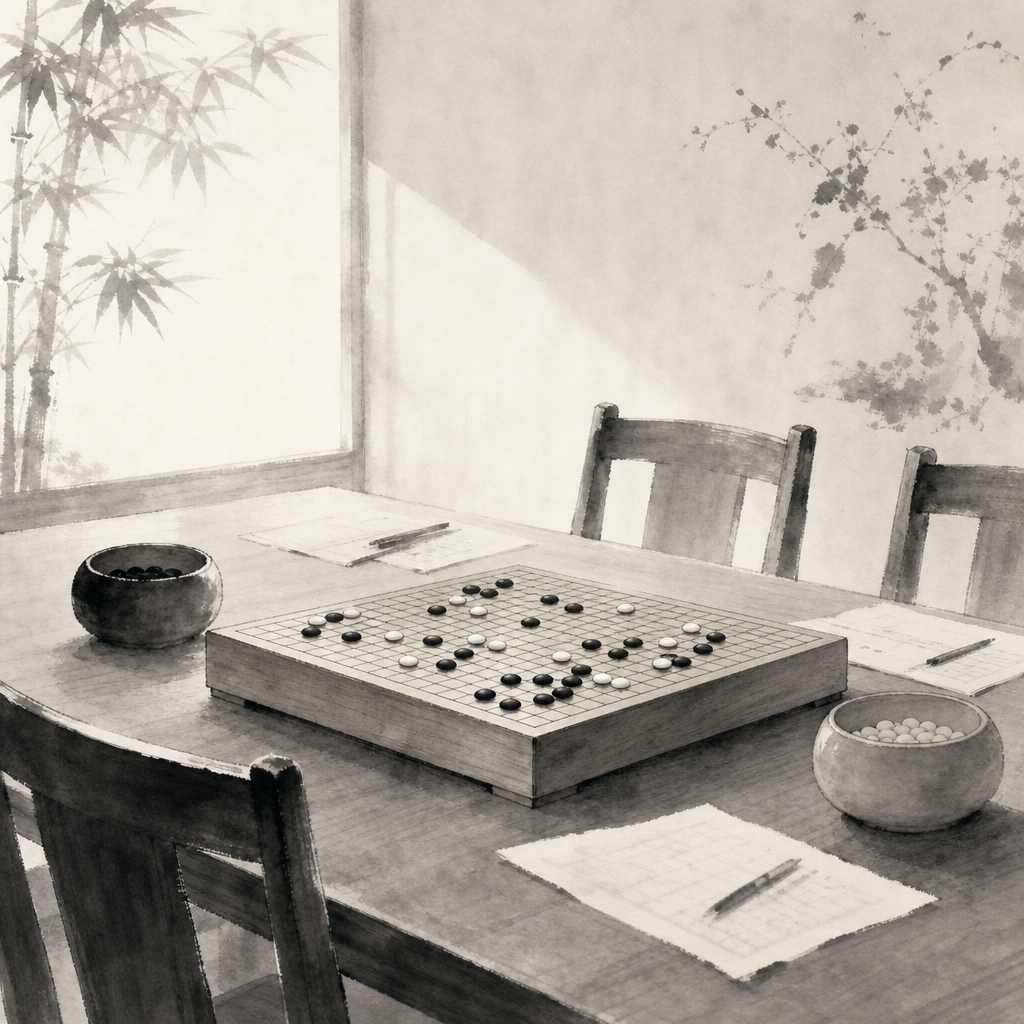
Have you seen this kind of game? One player reads deeply, plays a beautiful first half, and then, at the critical moment, loses the rhythm. Teammates can only sit nearby in silence. In an individual event, that is one mistake. In a team event, it becomes a tremor across four boards. The May registration line is a reminder: the World Team Championship in Tsaghkadzor, Armenia, this August is not only a larger stage. It is another kind of Gomoku, calmer, more restrained.
The May deadline starts the August match early
According to the RIF tournament page, the 2026 World Team Renju Championship will be held in Tsaghkadzor, Armenia, with registration closing on May 15. The Renju team event runs from August 8 to 16, followed by the Gomoku team rounds from August 16 to 19. The dates may look far away. In reality, the teams are already on the road.
Preparing for a team event is not a matter of lining up four strong names. It is more like sanding down a table in advance: who belongs on board one, who can steady a match when the team is behind, whose style can bear weight in the last round. The registration deadline is only a date on paper. The real competition begins the moment teammates are chosen.
Four boards change how a result is read
When one game ends, the result is clear. When four games exist at once, clarity thins out. You may see an open three on your own board, but also know that a teammate is already in byo-yomi. At that moment, whether to attack or hold back is no longer a local calculation.
Suppose board one has an early advantage, board three is forced into defense, and board four is balanced. The choice on board two becomes delicate. That player may not need the sharpest move. He may need the move least likely to collapse. Individual play often seeks maximum return. Team play often seeks minimum turbulence.
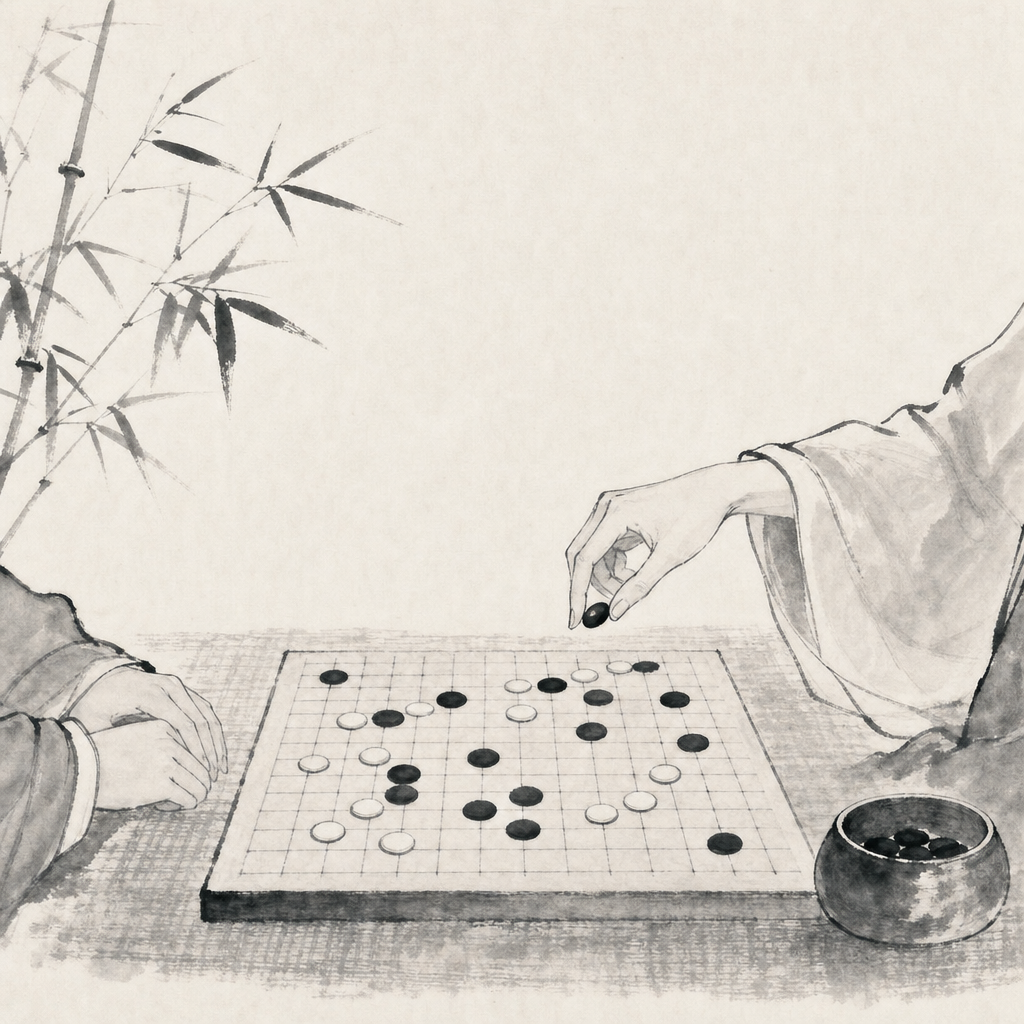
This brings out one of Gomoku’s finer qualities. The game is not simply about who can read farther. It is about who can keep touch when the information is incomplete. You cannot see every line your teammates are reading, yet you have to trust that they can bring their own boards home. Trust, too, is part of playing strength.
Team play slowly grinds lone courage into order
Taraguchi-10 and Swap2 make the opening more public
The tournament page states that the Renju team event will use Taraguchi-10, with a time control of 120 minutes plus 30 seconds per move. The RenjuNet Gomoku tournament page also lists the 2026 World Team Gomoku Championship as using Swap2, marked as rated. The rule names sound technical. Underneath, they point to the same idea: the opening is no longer a place where one player simply takes the advantage and keeps it.
In ordinary games, many players treat tengen as a kind of comfort. Opening preparation in a team event is more complicated, because the rules themselves split the right to choose, exchange it, and hand it back to the players. You cannot just memorize one convenient line. You have to know how much real value remains after that line has been swapped.
This also explains why international events care more and more about opening rules. The point is not to make the game uglier. It is to make the result more worth watching. Beauty is reason enough. But truly beautiful games are usually polished by rules first.
Teammates are not spectators. They are your sense of time
The most underrated thing in team play is time. The RIF tournament page gives 120 minutes plus 30 seconds. That sounds generous. But once you know the other three boards are also moving toward endgames, time is no longer just a number on a clock. It becomes breathing.
When you are ahead, playing fast can be a temptation. You want to turn an advantage into a win. You want to prove the calculation you just made. But in a team event, a quick victory is not always better than a stable advantage. If one move lunges too hard, it may create new noise for the whole team.
I prefer watching the boards that refuse to hurry. A player has a four-in-a-row, yet first repairs a key connection. A player can create threats on two lines, yet first makes sure the opponent has no live route back. This kind of play is not flashy, but it has a good feel.
A team needs four kinds of quiet
A team is made up of four players and as many as two substitutes. The number is interesting. It is small enough that no one can hide, and large enough that styles have to complement one another. Four players who all love to attack do not necessarily make a good team.
The first kind of quiet is not panicking in the opening. The second is not becoming greedy in the middlegame. The third is not going soft in the endgame. The fourth is not carrying the emotion of a loss into the next round.
These qualities matter in individual events too, but team play enlarges them. One player’s collapse can make teammates hurry. One player’s steadiness can let teammates wait. A team is not simply people sitting together in the hall. It is people who do not create unnecessary wind for one another.
The line from Brno to Dalian to Armenia
RIF’s news item on the 2025 World Gomoku and Renju Championship results noted that the 2025 GRWC was held in Brno, Czech Republic, and congratulated champions including Wang Qingqing, Pavel Laube, and Tomoharu Nakayama. The same item also pointed ahead to two important 2026 stops: the World Youth Renju Championship and Rapid Gomoku Championship in Dalian, China, at the end of July, and the World Team Renju and Gomoku Championships in Armenia in the first half of August.
Connect those places and a clear line appears. Gomoku and Renju have not settled around a single fixed center. Brno, Dalian, Tsaghkadzor, each carries a different temperature. Individual champions, youth events, team world championships: three kinds of light falling on the same board.
In August, watch first for who does not hurry
If you usually play only single-board games, try watching the August team event with different eyes. Do not rush to decide whether a move is best. Ask first whether it makes the whole match steadier or more chaotic. That question will relight many moves that look ordinary at first.
The quiet of four people often beats the sharpness of one
The May registration line will pass. The boards will open in August. When they do, choose one round and watch it whole: all four boards, all four clocks, the emotions too. Then try a game yourself. You may find that the sound of your own stone has grown a little lighter.